Custom Signage Manufacturing Process: From Design Drawings to Finished Signs
Custom Signage Manufacturing Process: From Design Drawings to Finished Signs
Custom signage manufacturing involves much more than cutting materials and assembling signs. For commercial projects such as hotels, shopping malls, office buildings, hospitals, and airports, every sign must be manufactured with attention to design specifications, material performance, installation requirements, and visual consistency.
Understanding the custom signage manufacturing process helps project owners, contractors, architects, and procurement teams communicate more effectively with signage suppliers and avoid unnecessary production delays.
In this guide, we explain the key stages of custom signage production, from reviewing technical drawings to manufacturing, quality inspection, and final delivery.
1. Reviewing Design Drawings and Project Requirements
The manufacturing process begins with a clear understanding of the project's design and technical requirements.
Before production, the signage manufacturer reviews the available drawings, dimensions, material specifications, finishes, installation locations, and any special functional requirements.
Important details typically include:
-
Sign dimensions and quantities
-
Material types and thicknesses
-
Colors, finishes, and graphic specifications
-
Illuminated or non-illuminated construction
-
Indoor or outdoor installation environments
-
Mounting methods and structural requirements
For larger commercial projects, reviewing these details early helps identify potential manufacturing challenges before materials are processed.
At MACCAN Signage, we support customized signage projects with CAD drawings and 3D design assistance, helping clients clarify manufacturing details before production.
2. Selecting Suitable Signage Materials
Material selection plays an important role in the appearance, durability, and performance of finished signage.
Common materials used in architectural signage manufacturing include stainless steel, aluminum, acrylic, and other materials selected according to project requirements.
Stainless Steel
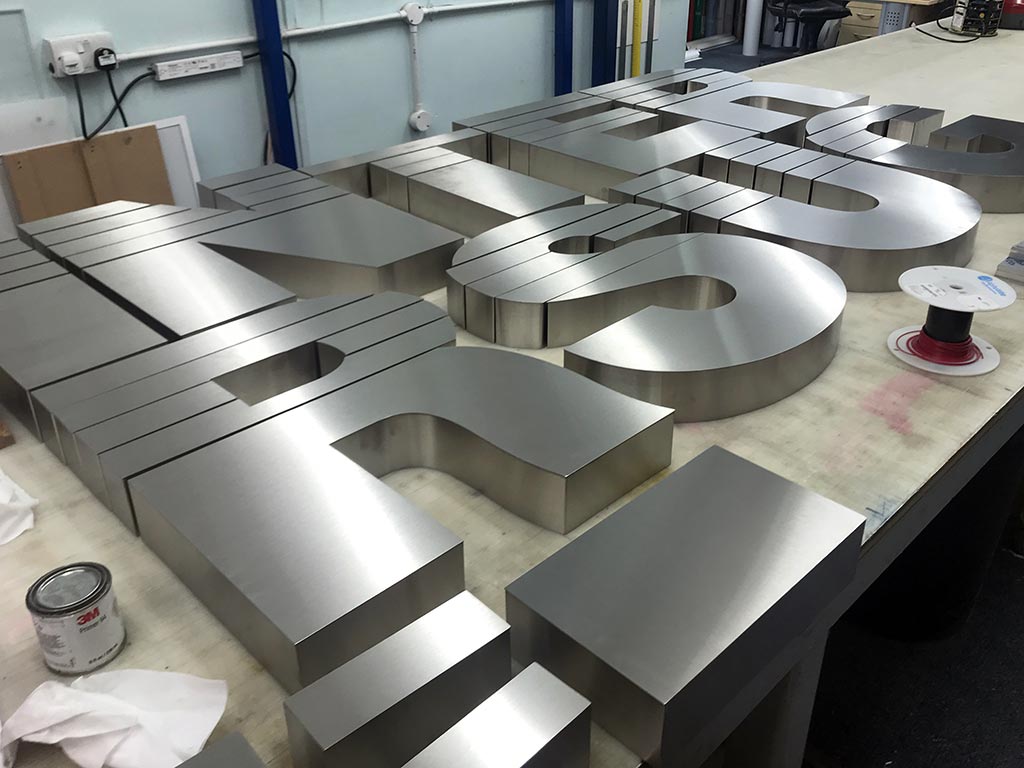
Stainless steel is commonly used for architectural lettering, identification signs, and premium commercial signage. Different surface finishes can create a polished, brushed, or other specified appearance.
Aluminum
Aluminum is lightweight and versatile, making it suitable for a wide range of indoor and outdoor signage applications. It can be fabricated into sign panels, frames, and dimensional lettering.
Acrylic
Acrylic is frequently used for illuminated signage, decorative panels, and interior identification signs. It offers flexibility in color, shape, and light transmission.
The right material depends on factors such as installation environment, design expectations, maintenance requirements, and project budget.
For additional information about the properties of stainless steel and other materials, buyers can refer to the World Stainless Association.
3. Cutting and Fabricating Signage Components
After drawings and materials are confirmed, production moves into the fabrication stage.
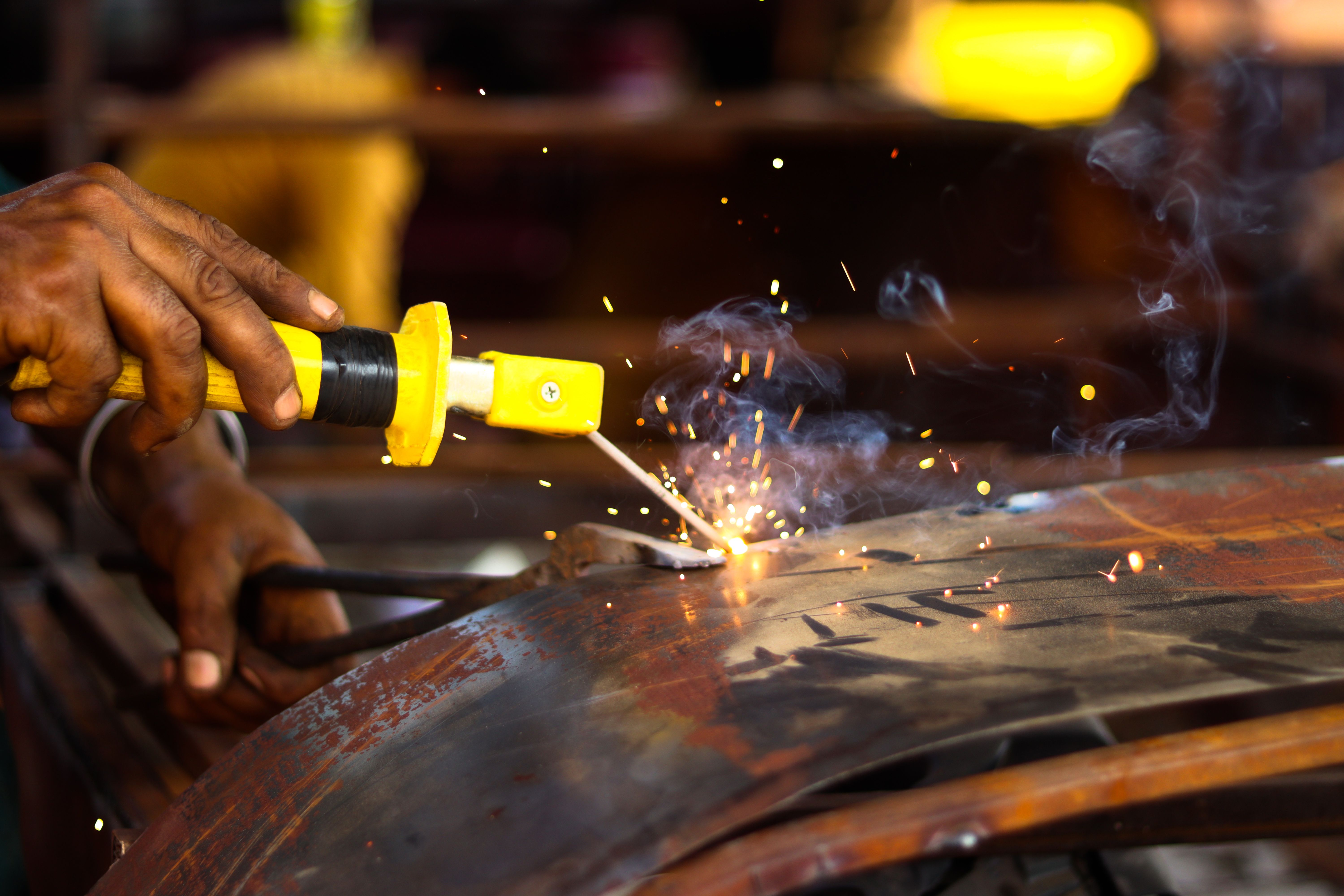
Depending on the signage design, manufacturing methods may include laser cutting, bending, welding, engraving, and other metal or acrylic processing techniques.
These processes are used to create components such as:
-
Dimensional letters and logos
-
Directional sign panels
-
Directory sign structures
-
Sign frames and mounting components
-
Custom architectural signage elements
-
Dimensional accuracy is particularly important for signage systems containing multiple signs that must follow consistent specifications.
-
Careful fabrication also helps reduce problems during assembly and installation.
You can learn more about our production capabilities and manufacturing facilities.

4. Surface Finishing and Color Consistency
Surface finishing affects both the visual appearance and long-term performance of signage.
Depending on the material and design, common finishing options include brushing, polishing, painting, and powder coating.
For commercial projects, color and finish consistency can be especially important when signs are installed across multiple floors, buildings, or locations.
Manufacturers should confirm the required color references, surface textures, and finish samples before proceeding with large-scale production.
For brand and retail chain projects, maintaining consistent finishes across batches helps support a unified visual identity.
5. Assembly and Illuminated Signage Production
Once the individual components are fabricated and finished, they are assembled into complete signage products.
For non-illuminated signs, assembly may involve attaching lettering, panels, structural supports, and mounting accessories.
Illuminated signage requires additional consideration of LED modules, power supplies, wiring arrangements, light diffusion, and maintenance access.
The construction method should match the intended installation environment and design requirements.
For example, outdoor illuminated signs may require additional attention to weather exposure, drainage, electrical protection, and installation conditions.
Before production is finalized, it is important to confirm the electrical specifications and lighting requirements for the destination market.
6. Quality Inspection Before Delivery
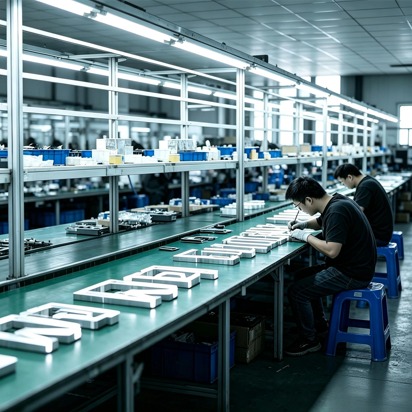
Quality inspection is an essential part of the custom signage manufacturing process.
A finished sign should be checked against the approved drawings and project specifications before shipment.
Typical inspection items include:
-
Dimensions and overall appearance
-
Material and surface finish
-
Color and graphic accuracy
-
Assembly quality and component fit
-
Illumination performance, where applicable
-
Packaging and identification requirements
-
For multi-location or large-scale signage projects, consistent inspection criteria can help reduce variations between production batches.
Clear communication between the client and manufacturer also makes it easier to resolve any issues before shipping.
7. Packaging and International Shipping Preparation
Finished signage must be protected during handling and transportation.
Packaging methods depend on the size, weight, material, and structure of each sign.
Delicate surfaces, dimensional lettering, acrylic components, and illuminated signs may require additional protective materials or reinforced packaging.
For overseas projects, clear labeling and organized packaging can also make it easier for installation teams to identify the correct signage components after delivery.
Manufacturers and buyers should confirm shipping requirements, delivery schedules, and documentation before dispatch.
8. How to Prepare for a Custom Signage Manufacturing Project
Providing complete project information helps manufacturers evaluate production requirements and prepare more accurate quotations.
Before contacting a signage supplier, buyers should ideally prepare:
-
Design drawings or reference images
-
Dimensions and estimated quantities
-
Preferred materials and finishes
-
Installation locations
-
Lighting requirements, if applicable
-
Target delivery schedule
-
Destination country
When detailed drawings are not yet available, reference images and a clear project description can provide a useful starting point for technical discussions.
For a more detailed checklist, read our guide on what information a signage manufacturer needs to prepare a quote.
For larger projects, sample confirmation before mass production can help align expectations regarding materials, colors, and construction details.
9. Working with MACCAN Signage
MACCAN Signage is a China-based manufacturer specializing in custom architectural signage and wayfinding systems for commercial and public environments.
We support signage projects for hotels, shopping malls, commercial buildings, airports, healthcare facilities, schools, and retail chains.
Our services include signage engineering, material selection, custom manufacturing, quality control, and installation guidance.
From individual custom signs to coordinated signage systems, we work with overseas clients to translate project requirements into practical manufacturing solutions.
Planning a custom signage project?
Ready to discuss your signage requirements? Contact MACCAN Signage to share your drawings, material preferences, quantities, and project schedule.
Shopping Mall Signage Manufacturer: A Procurement Guide for Commercial Projects
Metal vs. Acrylic Signage: How to Choose the Right Material for Your Project
Related Article