How to Source Custom Wayfinding Signage from China: A Guide for International Buyers
How to Source Custom Wayfinding Signage from China: A Guide for International Buyers
Sourcing custom wayfinding signage for an international commercial project involves more than comparing unit prices. Buyers need to consider material specifications, manufacturing capabilities, design coordination, quality control, packaging, and international shipping.
For hotels, shopping malls, hospitals, office buildings, and other large-scale developments, wayfinding signs are often produced in multiple sizes, materials, and installation configurations. Working with the right manufacturing partner can help simplify procurement and maintain consistency across the project.
This guide explains the key considerations when sourcing custom wayfinding signage from China.
1. Define Your Project Requirements Before Requesting a Quote
Before contacting a wayfinding signage manufacturer, buyers should prepare basic project information.
This helps suppliers understand the scope of work and provide more accurate manufacturing recommendations.
| Project Information | What to Prepare |
|---|---|
| Project type | Hotel, shopping mall, hospital, office building, or other facility |
| Signage categories | Directional signs, directories, identification signs, regulatory signs |
| Quantity | Estimated quantity for each sign type |
| Dimensions | Sign sizes or preliminary design drawings |
| Materials | Aluminum, stainless steel, acrylic, or other specified materials |
| Installation | Wall-mounted, suspended, freestanding, or recessed |
| Lighting | Non-illuminated or LED illuminated |
| Delivery | Destination country and required project schedule |
If final drawings are not available, preliminary layouts, reference photographs, and approximate dimensions can still help start the discussion.
2. Evaluate the Manufacturer's Project Capabilities
Not all signage suppliers have the same manufacturing capabilities.
Some focus on standardized retail products, while others specialize in custom architectural signage and project-based wayfinding systems.
For international B2B projects, buyers should evaluate whether a supplier can support multiple signage categories within the same development.
Key questions include:
-
Can the manufacturer produce custom signage according to architectural drawings?
-
Can different sign types maintain consistent colors, finishes, and typography?
-
Does the supplier have experience with commercial and institutional projects?
-
Can the factory coordinate metal fabrication, acrylic processing, surface finishing, and LED assembly?
-
Can the manufacturer provide technical recommendations before production?
A project-oriented supplier should be able to explain how signage designs will be translated into manufacturable components.
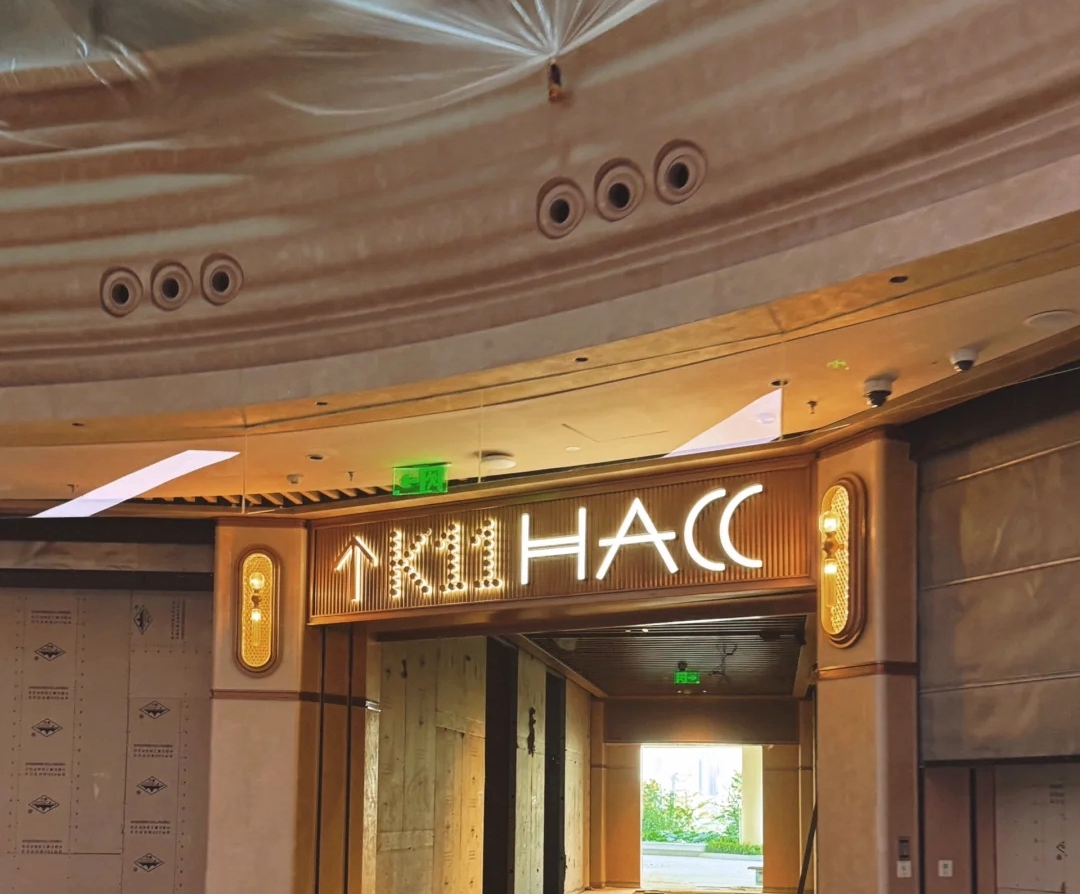
For more information about commercial applications, explore our Shopping Mall & Retail Signage Solutions.
3. Compare Materials Based on Application
Material selection affects appearance, durability, maintenance, and cost.
The most suitable material depends on whether a sign will be installed indoors or outdoors, how it will be mounted, and the desired visual finish.
| Material | Common Applications | Main Considerations |
|---|---|---|
| Aluminum | Directional signs, suspended signs, freestanding directories | Lightweight, versatile, suitable for multiple finishes |
| Stainless steel | Architectural letters, identification signs, premium directories | Durable, available in brushed and polished finishes |
| Acrylic | Illuminated letters, sign faces, interior information signs | Suitable for light diffusion and decorative applications |
| Powder-coated metal | Outdoor and indoor wayfinding systems | Color consistency and surface preparation |
| LED components | Illuminated directional and identification signs | Brightness, electrical specifications, maintenance access |
For outdoor projects, buyers should also discuss environmental exposure, corrosion resistance, mounting requirements, and local electrical regulations where applicable.

4. Review Drawings and Samples Before Mass Production
One of the most important stages of custom signage procurement is confirming the manufacturing details before bulk production.
Depending on the project, this may involve:
-
Reviewing CAD drawings and technical dimensions.
-
Confirming material thickness and surface finishes.
-
Checking color references and graphic specifications.
-
Reviewing LED lighting arrangements for illuminated signs.
-
Producing material or physical samples when required.
-
Approving the final specifications before production.
Samples can be particularly useful for projects with strict architectural branding requirements.
At MACCAN Signage, custom project support includes CAD and 3D design coordination to help customers review proposed manufacturing details.
5. Maintain Consistency Across the Entire Wayfinding System
Large developments often require dozens or hundreds of individual signs.
Even when the signs have different functions, they should appear as part of one coordinated system.
Buyers should confirm consistency in:
-
Typography and icon styles
-
Color specifications
-
Metal and acrylic finishes
-
Sign proportions
-
Illumination color and brightness
-
Mounting details
-
Directional arrow design
A coordinated production process can reduce visual inconsistencies between different signage categories.
For a closer look at shopping mall applications, read our Shopping Mall Wayfinding Signage Guide.
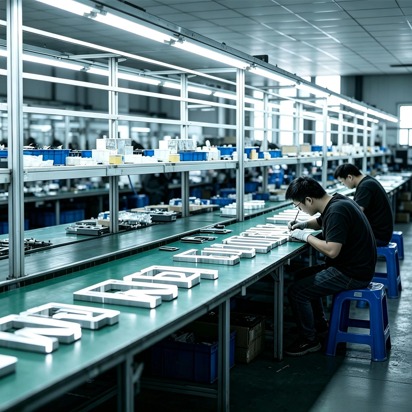
6. Confirm Quality Control and Packaging Requirements
International signage projects may involve long-distance transportation and multiple installation locations.
Buyers should discuss how finished signs will be inspected and protected before shipment.
Important quality checks may include:
| Inspection Area | Key Checks |
|---|---|
| Dimensions | Accuracy against approved drawings |
| Surface finish | Scratches, coating consistency, and visible defects |
| Graphics | Text accuracy, alignment, and readability |
| Assembly | Structural connections and component fit |
| Illumination | Lighting consistency and electrical functionality |
| Packaging | Protection of sign faces, corners, and fragile components |
For larger projects, it may also be useful to agree on labeling and packing lists that identify the intended installation location of each sign.
7. Plan for International Shipping and Installation
Custom signage can vary significantly in size, weight, and packaging requirements.
Before confirming an order, buyers should discuss:
-
Delivery destination and shipping terms
-
Packaging dimensions and total shipment volume
-
Export documentation requirements
-
Assembly requirements after delivery
-
Installation drawings and mounting accessories
-
Availability of replacement components
For projects with multiple installation phases, a clearly defined delivery schedule can help coordinate signage production with construction progress.
Installation requirements and local regulatory approvals should also be confirmed with the project team in the destination market.
8. How MACCAN Signage Supports International B2B Projects
MACCAN Signage is a custom signage manufacturer in China, providing design coordination, engineering support, and manufacturing services for commercial projects.
Our project applications include:
-
Hotels and hospitality developments
-
Shopping malls and retail centers
-
Commercial and office buildings
-
Healthcare facilities
-
Schools and campuses
-
Transportation facilities
-
Brand and retail chain stores
We work with project buyers to review signage requirements, discuss suitable materials, and coordinate custom manufacturing based on approved specifications.
Whether a project requires architectural letters, directional signs, directories, or illuminated wayfinding elements, the goal is to deliver a coordinated signage solution that meets the project's design and functional requirements.
Frequently Asked Questions
1. What information is needed to get a custom wayfinding signage quotation?
Buyers should ideally provide drawings, sign dimensions, quantities, material preferences, installation details, and the destination country. Reference images can also help clarify design expectations.
2. Can a Chinese signage manufacturer produce signs based on architectural drawings?
Many custom signage manufacturers can work from CAD drawings and project specifications. Buyers should confirm the supplier's engineering and manufacturing capabilities before placing an order.
3. Is it necessary to request a sample before bulk production?
Samples are particularly useful when color, finish, lighting, or structural details require approval. The need for sampling depends on project complexity and procurement requirements.
4. What materials are commonly used for commercial wayfinding signs?
Aluminum, stainless steel, and acrylic are commonly used. Material selection depends on the installation environment, design requirements, and budget.
5. How can buyers reduce risks when importing custom signage?
Clear technical specifications, approved drawings, sample confirmation, production inspections, suitable packaging, and agreed shipping terms can help reduce procurement risks.
Start Your Custom Wayfinding Signage Project
Looking for a manufacturing partner for your next commercial signage project?
Contact MACCAN Signage to discuss your drawings, material requirements, estimated quantities, and delivery destination.
Website: https://www.maccansignage.com
Email: info@maccansignage.com
WhatsApp: +852 6959 3497
How to Prepare a Signage Schedule for a Commercial Project
Shopping Mall Signage Manufacturer: A Procurement Guide for Commercial Projects
Related Article