5 Key Factors to Consider When Planning a Hotel Wayfinding System
5 Key Factors to Consider When Planning a Hotel Wayfinding System
A well-designed wayfinding system is an essential part of a successful hotel environment. From the moment guests enter the property, signage helps them understand where they are, where they need to go and how to reach their destination efficiently.
For hotels, wayfinding signage must balance functionality, aesthetics and brand identity. A clear and consistent system can improve the guest experience while becoming an integrated part of the hotel's architecture and interior design.
When planning a hotel wayfinding system, several key factors should be considered.
1. Understand the Hotel Layout and Guest Journey
The first step is to understand how guests move through the property.
A hotel may include a lobby, reception area, guest rooms, restaurants, meeting rooms, elevators, parking areas, fitness facilities, swimming pools and other public spaces.
Signage should be planned according to the natural guest journey, from arrival and reception to elevators, rooms and other facilities.
Identifying key decision points in advance helps ensure that visitors receive the right information at the right location.
2. Create a Clear Information Hierarchy
Hotel signage should communicate information quickly without overwhelming guests.
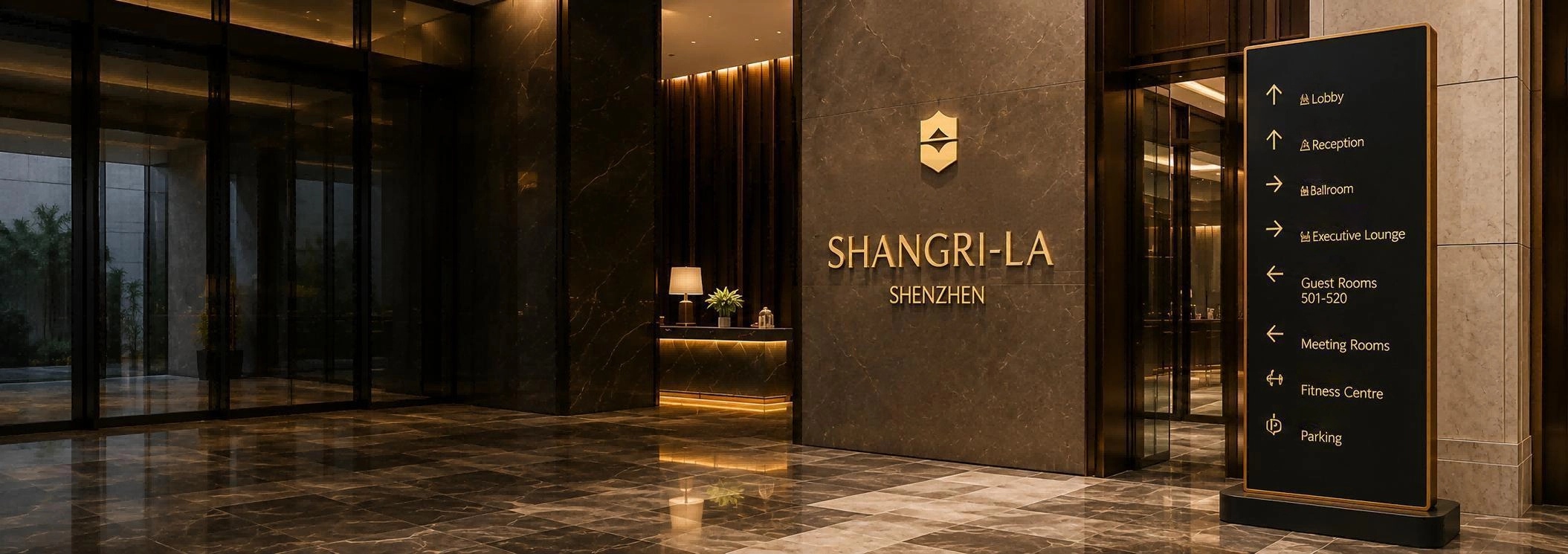
A complete hotel wayfinding system may include:
- Directional signs
- Lobby and directory signs
- Room identification signs
- Restroom signs
- Facility identification signs
- Parking signs
- Meeting room signs
- Regulatory and safety signs
The visual hierarchy should remain consistent throughout the property. Typography, arrows, icons, colors and layouts should follow the same design language so that guests can easily recognize and understand the signage system.
3. Align Signage With the Hotel Brand
Hotel signage is not only functional. It is also part of the property's visual identity.
Materials, finishes, typography, colors and lighting should complement the hotel's architectural and interior design.
For branded hotels and international hotel groups, signage should also follow the relevant brand guidelines while adapting to the specific characteristics of the property.
Well-integrated signage can help create a more cohesive and premium guest experience.
4. Select Materials and Finishes for Long-Term Performance
Hotels typically operate for many years, and signage in high-traffic areas may be exposed to frequent contact and cleaning.
Material selection should therefore consider durability, appearance and maintenance requirements.
Common materials for hotel signage include stainless steel, aluminum, acrylic, brass, glass and wood-based finishes.
Different areas may require different solutions. For example, interior room identification signs may focus on aesthetics and tactile details, while parking and outdoor signs may require stronger weather resistance and structural performance.
5. Consider Installation and Future Maintenance
Installation should be considered during the design and engineering stage, not after production.
Wall conditions, ceiling structures, fixing methods, electrical requirements and maintenance access can all affect the final signage design.
For illuminated signage, access to LED modules, power supplies and other electrical components should also be considered to simplify future maintenance.
A well-engineered signage system can reduce installation difficulties and help maintain consistent quality throughout the project.
Building a Consistent Hotel Wayfinding System
A successful hotel signage system is the result of careful planning rather than a collection of individual signs.
The best results come from coordinating:
Wayfinding Strategy → Signage Design → Engineering → Material Selection → Manufacturing → Installation
Each stage should work together to create a clear, durable and visually consistent system.
At Maccan Signage, we provide custom signage and wayfinding solutions for hotels and hospitality projects, from design and engineering to manufacturing.
Our team works with project owners, architects, interior designers, contractors and hotel brands to develop signage systems tailored to the requirements of each property.
Final Thoughts
A well-planned hotel wayfinding system should make navigation easier while supporting the property's architecture, interior design and brand identity.
By considering the guest journey, information hierarchy, brand requirements, material selection and installation conditions from the beginning, hotels can create a signage system that is both functional and visually integrated.
Planning a hotel signage or wayfinding project?
Contact Maccan Signage to discuss your project requirements.
Website: //www.maccansignage.com
Email: info@maccansignage.com
WhatsApp: +86 13632789975
How to Choose the Right Wayfinding Signage for Commercial Projects
Related Article