Hotel Wayfinding Signage Systems: Materials, Manufacturing & Project Planning Guide
Hotel Wayfinding Signage Systems: Materials, Manufacturing & Project Planning Guide
A well-designed hotel wayfinding signage system helps guests navigate a property while maintaining a consistent architectural and brand identity. For hotel developers, architects, interior designers, and procurement teams, signage is not simply a collection of individual signs. It is a coordinated system that must address navigation, material durability, accessibility, manufacturing quality, and installation requirements.
From exterior hotel identification signs to lobby directories and guest room numbers, every component should support the overall guest experience and integrate with the property's design.
At Maccan Signage, we manufacture custom architectural signage and wayfinding systems for hospitality and commercial projects, supporting customers from drawing development and material selection to production, quality inspection, and international delivery.
Key Takeaways
-
A complete hotel wayfinding signage system includes exterior identification, lobby directories, directional signs, room numbers, facility signs, and safety information.
-
Material selection should consider appearance, corrosion exposure, maintenance, installation conditions, and project specifications.
-
Custom hotel signage manufacturing requires coordinated drawings, approved samples, fabrication, quality inspection, and delivery planning.
-
Accessibility and safety requirements vary by country and should be reviewed before finalizing signage specifications.
-
Project-level signage procurement should focus on overall system consistency, manufacturing capability, and installation coordination rather than individual sign prices alone.
1. What Is a Hotel Wayfinding Signage System?
A hotel wayfinding signage system is a coordinated collection of visual identification and directional signs that helps guests, visitors, and staff navigate a hospitality property.
Unlike standalone signs, a complete system considers the entire journey through the hotel, from arrival and check-in to guest rooms, restaurants, meeting facilities, and recreational areas.
Typical components include:
| Signage Type | Common Applications | Primary Function |
|---|---|---|
| Exterior identification signage | Hotel logos, entrance signs, monument signs | Building identification |
| Lobby and reception signage | Reception signs, directories, elevator directions | Arrival and navigation |
| Guest room signage | Room numbers, floor identification | Room and floor recognition |
| Directional signage | Corridors, meeting rooms, restaurants | Route guidance |
| Facility identification | Spa, gym, swimming pool, dining areas | Facility recognition |
| Parking signage | Vehicle directions, parking zones | Vehicle navigation |
| Safety and accessibility signage | Emergency information, accessible facilities | Safety and accessibility |
Large resorts and mixed-use hospitality developments may also require outdoor pedestrian wayfinding, building identification, multilingual directories, and coordinated signage across multiple structures.
A consistent signage system helps maintain clarity throughout the property while supporting the hotel's architectural identity.
2. Why Is Hotel Wayfinding Signage Important?
Improving Guest Navigation
Hotel guests are often unfamiliar with the building layout. Clear signage helps them locate reception areas, elevators, guest rooms, restaurants, meeting spaces, and other facilities.
A coordinated navigation system can reduce confusion at decision points, particularly in large hotels and resorts with multiple buildings or complex circulation routes.
Maintaining Brand Consistency
Architectural signage contributes to the visual identity of a hospitality property.
Typography, materials, colors, illumination, and surface finishes should coordinate with the hotel's branding and interior design.
For example, a luxury hotel may specify brushed metal lettering, decorative brass finishes, or discreet illumination, while a business hotel may prioritize clear typography, durable materials, and consistent directional information.
These are design approaches rather than fixed rules for different hotel categories.
Supporting Daily Operations
Effective signage can also support hotel operations by making public facilities and circulation routes easier to understand.
Clearly identified meeting rooms, elevators, service areas, and public amenities can improve navigation for guests and staff.
3. Essential Types of Custom Hotel Signage
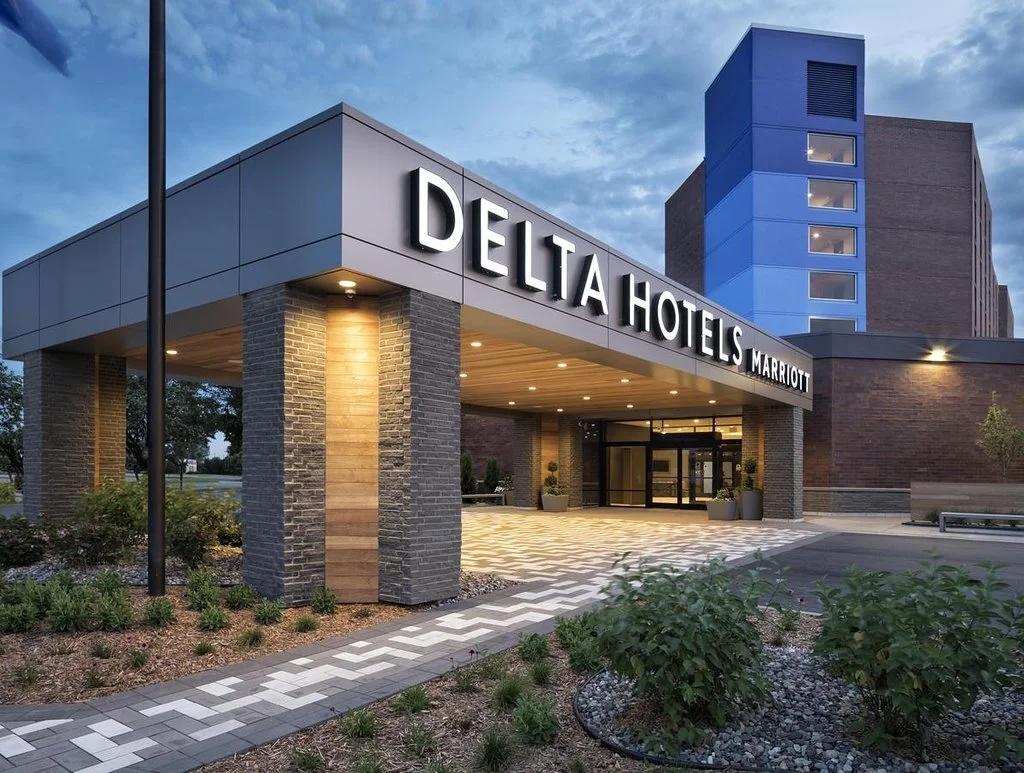
Exterior Hotel Identification Signs
Exterior signage helps guests recognize the hotel from nearby roads, pedestrian areas, and arrival points.
Common products include:
-
Illuminated hotel logos
-
Metal channel letters
-
Architectural building identification signs
-
Monument signs
-
Entrance directional signs
Exterior hotel signage should be designed according to its installation environment.
Important considerations include wind exposure, moisture, sunlight, structural support, electrical access, and long-term maintenance.
Lobby and Reception Signage
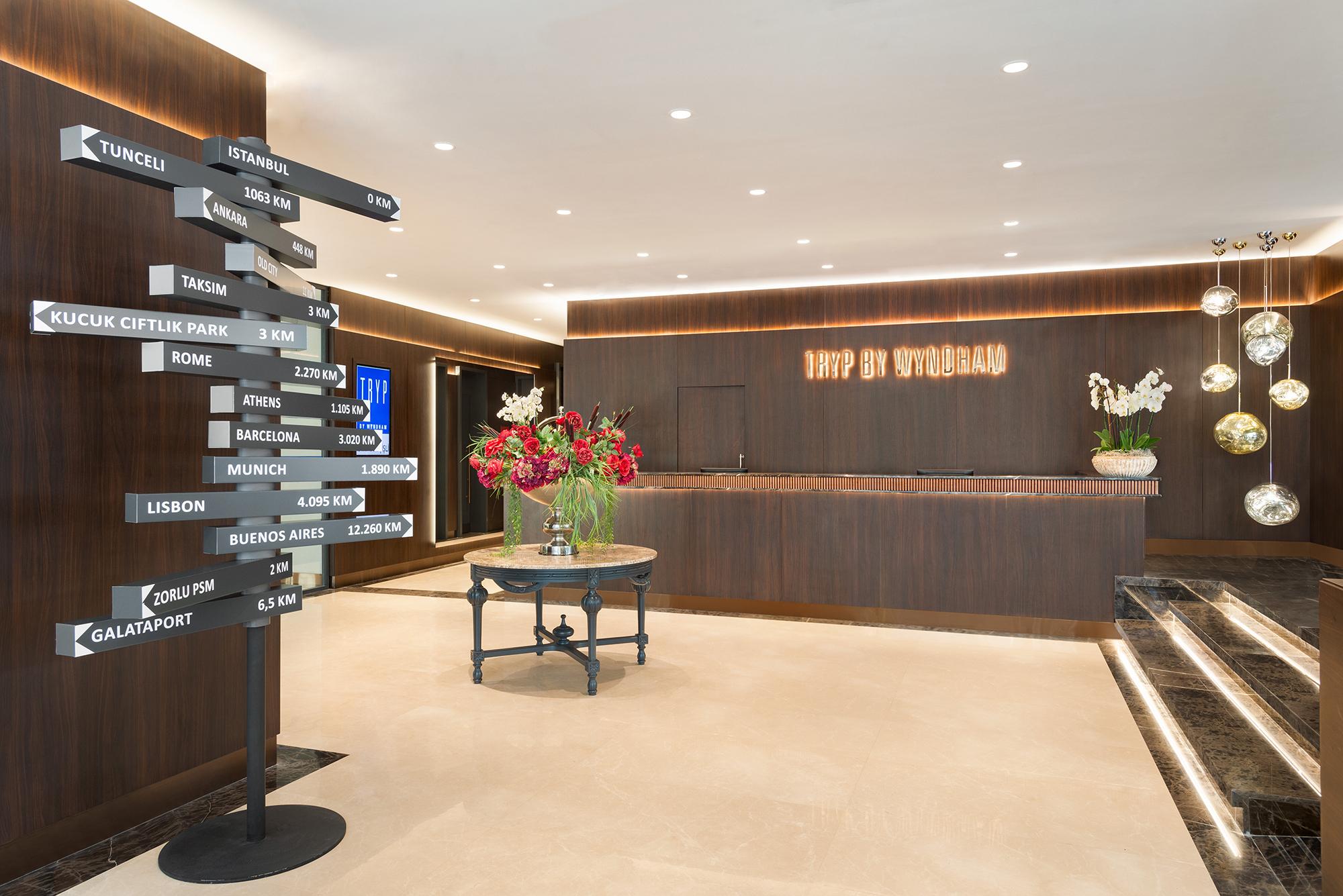
Lobby signage is often one of the first visual elements guests encounter after entering a hotel.
Typical applications include reception identification, lobby directories, elevator directions, and meeting room information.
Materials such as aluminum, stainless steel, brass, and acrylic may be used depending on the architectural design and desired finish.
For premium interiors, careful attention should be given to surface consistency, edge finishing, installation alignment, and visual integration.
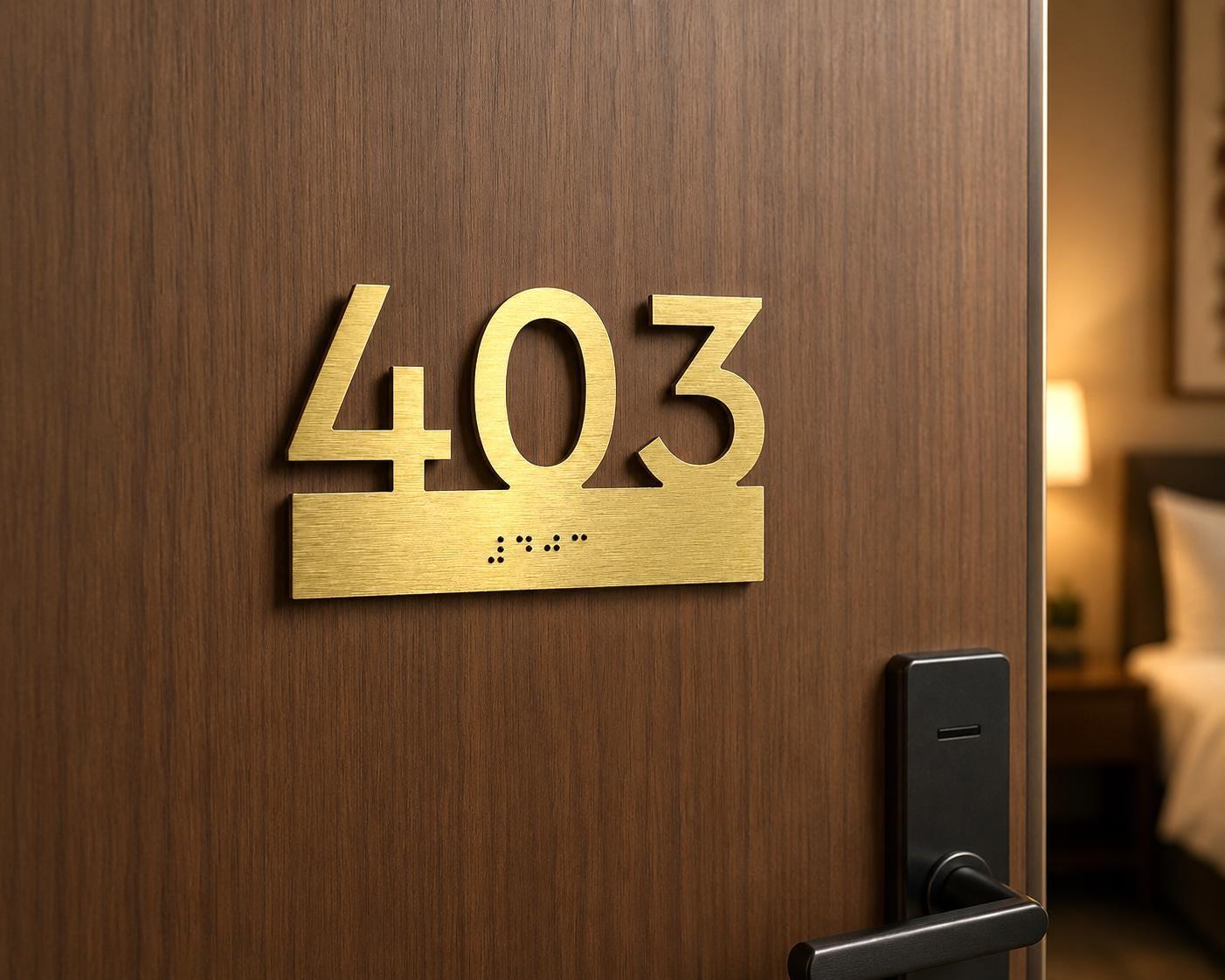
Guest Room Number Signs
Guest room signs are repeated throughout the property, making consistency particularly important.
Room number signage should follow approved specifications for:
-
Typography and numbering
-
Dimensions and positioning
-
Color contrast
-
Surface finishing
-
Mounting details
-
Applicable accessibility requirements
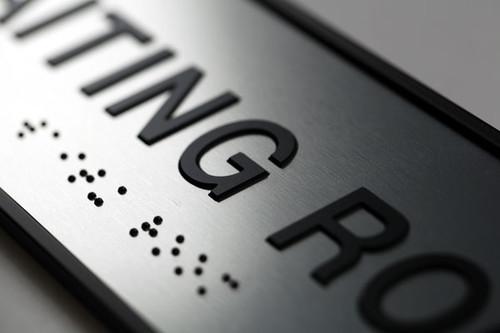
For projects in the United States, certain permanent room identification signs may be subject to accessibility requirements concerning tactile characters, Braille, and installation locations.
Reference: U.S. Access Board — ADA Accessibility Standards, Section 703: Signs.
https://www.access-board.gov/ada/chapter/ch07/#703-signs
Restaurant, Spa, and Facility Signage
Hotels often contain multiple facilities with different functions and visual identities.
Restaurant identification, spa signage, fitness center signs, and meeting room directories should be coordinated with the overall wayfinding system.
A unified approach to typography, material selection, and placement helps maintain consistency without requiring every sign to have an identical appearance.
4. What Materials Are Used for Hotel Wayfinding Signage?
Material selection is one of the most important decisions in custom hotel signage manufacturing.
The appropriate material depends on the installation environment, visual requirements, expected service conditions, and maintenance considerations.
| Material | Typical Hotel Applications | Key Considerations |
|---|---|---|
| Aluminum | Exterior lettering, directional signs, sign structures | Lightweight, versatile, suitable for painting and other finishes |
| 304 Stainless Steel | Interior metal lettering, room signs, decorative signs | Corrosion resistance, appearance, surface finish |
| 316 Stainless Steel | Selected coastal and chloride-exposed applications | Improved resistance to chloride-related corrosion compared with 304 |
| Brass | Luxury hotel logos, decorative lettering, interior signs | Decorative appearance, oxidation, surface protection |
| Acrylic | Illuminated signs, room signs, interior identification | Fabrication flexibility, illumination, surface durability |
Aluminum Hotel Signage
Aluminum is commonly considered for architectural signage because of its relatively low weight and fabrication flexibility.
It can be used for dimensional lettering, sign panels, directional signs, and structural components.
Depending on the design, aluminum signs may receive powder coating, painting, anodizing, or other specified surface treatments.
Stainless Steel Hotel Signage
Stainless steel is frequently considered where a refined metal appearance and corrosion resistance are required.
304 stainless steel is suitable for many interior and less aggressive environments, while 316 stainless steel may be considered where chloride exposure is a concern.
However, selecting 316 stainless steel does not eliminate the need for proper fabrication, surface finishing, cleaning, and maintenance.
The final grade should be selected according to actual environmental conditions and project specifications.
Brass Hotel Signage
Brass can provide a distinctive decorative appearance for hotel branding, reception signage, and interior identification.
Depending on the design, brass may be polished, brushed, or protected with an appropriate coating.
Maintenance requirements and potential surface changes should be considered before selecting the final finish.
Acrylic and Illuminated Signage
Acrylic is widely used in fabricated and illuminated signs because it can be shaped, colored, and combined with lighting components.
For LED illuminated hotel signage, important specifications include light distribution, color temperature, electrical requirements, material compatibility, and maintenance access.
5. How Are Custom Hotel Signs Manufactured?
Custom hotel signage manufacturing involves several coordinated stages.
The objective is to translate approved architectural designs into finished signage that meets the project's technical and visual requirements.
Step 1: Drawing Review and Technical Development
The manufacturing team reviews the drawings, dimensions, materials, finishes, and installation requirements.
Depending on the project, shop drawings may be required to clarify:
-
Sign construction
-
Material thickness
-
Mounting methods
-
Electrical components
-
Structural connections
-
Installation interfaces
Clear technical documentation helps reduce misunderstandings before production.
Step 2: Material and Finish Confirmation
Material grades, colors, surface finishes, and illumination requirements should be confirmed before manufacturing.
Physical samples may be required for decorative metal finishes, custom paint colors, or illuminated lettering.
Sample approval is particularly useful when the project includes multiple sign types that must maintain a consistent appearance.
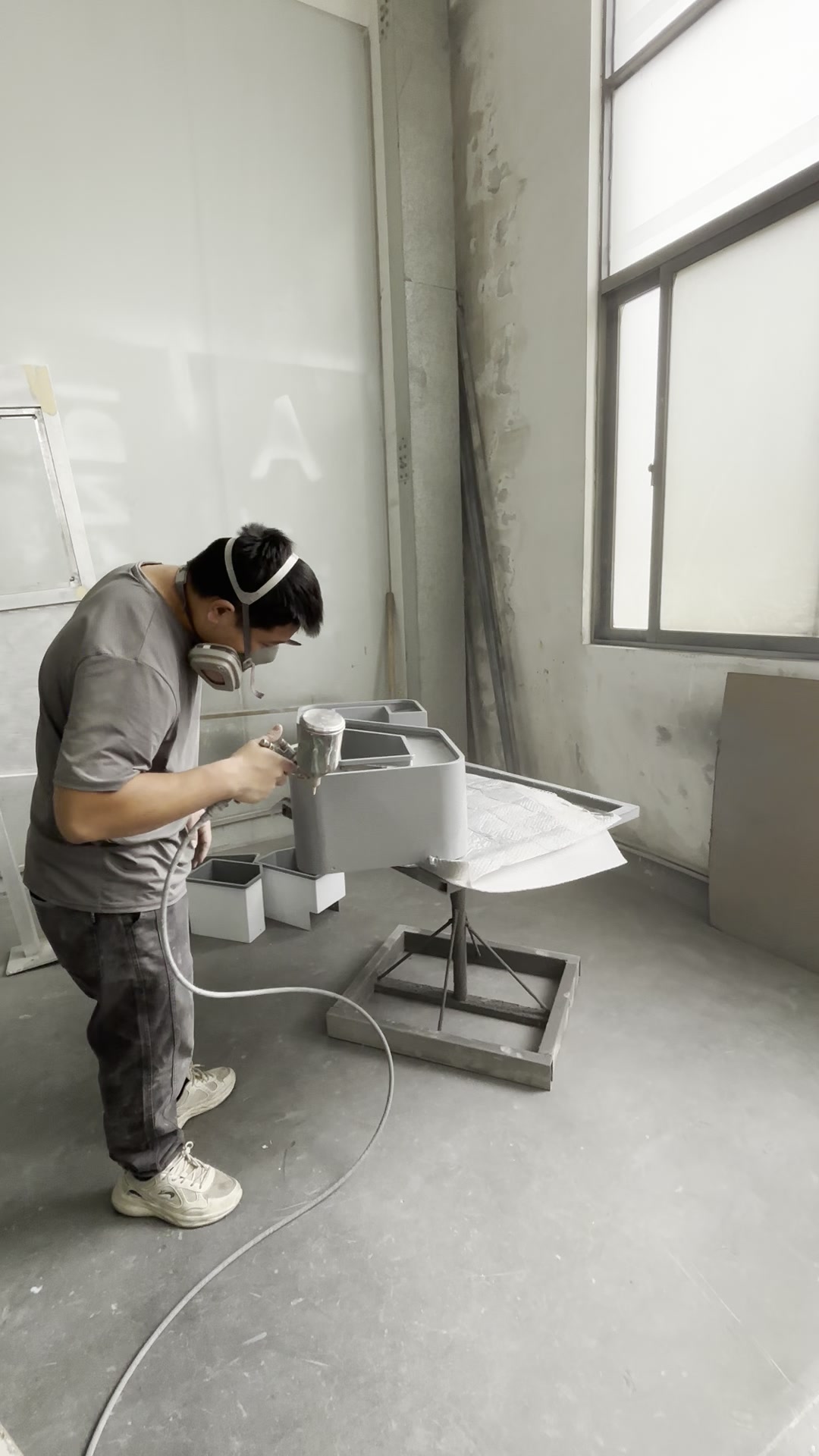
Step 3: Fabrication and Assembly
Depending on the approved design, production may involve metal cutting, forming, welding, surface finishing, painting, acrylic processing, LED assembly, and final sign assembly.
Different sign types may require different manufacturing methods.
The production process should follow the approved drawings and project specifications.
Step 4: Quality Inspection
Quality inspection should consider both visual appearance and technical requirements.
Typical checks may include:
-
Dimensions and construction
-
Surface finishing
-
Color consistency
-
Assembly quality
-
Illumination performance, where applicable
-
Packaging condition
The specific inspection criteria should be agreed upon according to the project requirements.
Step 5: Packaging and International Delivery
International hotel signage projects often include multiple product categories and installation locations.
Organized packaging, product identification, and packing documentation help customers manage receiving and installation.
For large projects, delivery planning may need to coordinate with construction schedules and installation phases.
6. What Should Buyers Consider Before Ordering Hotel Signage?
Hotel signage procurement involves more than selecting a material and requesting a unit price.
For project-level orders, buyers should evaluate the complete signage scope and manufacturing requirements.
Signage Schedule and Quantities
A signage schedule should identify the sign types, dimensions, quantities, locations, and relevant specifications.
This helps manufacturers understand the project scope and prepare more accurate quotations.
Design Consistency
Signage should follow approved branding, typography, color, and material standards.
Where multiple contractors or suppliers are involved, coordination is particularly important.
Installation Requirements
Mounting methods, wall construction, electrical connections, and access conditions should be confirmed before production.
For large exterior signs, additional structural and engineering requirements may apply.
Local Regulations
Accessibility, electrical safety, fire safety, and building requirements vary between countries and jurisdictions.
Buyers should verify the applicable requirements with the project design team and local authorities.
Delivery Schedule
Manufacturing lead times depend on sign complexity, quantities, sample approvals, materials, and production arrangements.
International transportation and installation schedules should also be considered.
7. Common Challenges in International Hotel Signage Projects
International hospitality developments may involve hotel owners, architects, interior designers, general contractors, procurement teams, and signage manufacturers.
Common challenges include:
Design revisions: Changes to layouts, room numbering, finishes, or branding may affect production documents.
Multiple signage categories: Exterior letters, room signs, directional signs, and decorative signage may require different manufacturing processes.
Environmental exposure: Coastal resorts, humid environments, and high-temperature locations may require additional material and finish considerations.
Multilingual signage: International hotels may require more than one language, affecting typography, layout, and sign dimensions.
Installation coordination: Signs integrated into walls, ceilings, and architectural finishes require accurate mounting details.
Early coordination helps reduce avoidable changes during manufacturing and installation.
8. Why Work with a Project-Based Hotel Signage Manufacturer?
For large hospitality developments, working with a manufacturer capable of supporting multiple signage categories can simplify production coordination.
When evaluating a potential manufacturing partner, buyers should consider:
-
Experience with custom architectural signage
-
Metal fabrication and surface finishing capabilities
-
LED illuminated signage production
-
Technical drawing and sample development
-
Quality inspection procedures
-
International packaging and shipping coordination
-
Installation guidance and after-sales support
Maccan Signage provides custom architectural signage manufacturing and wayfinding solutions for hotels, shopping malls, commercial buildings, healthcare facilities, educational campuses, and other project environments.
Our capabilities include drawing development, material selection, sample production, metal fabrication, illuminated signage manufacturing, quality inspection, and export coordination.
For hospitality projects, our objective is to support consistent manufacturing across different signage types while coordinating with approved project specifications.
https://www.maccansignage.com/hotel-signage.html
9. Hotel Wayfinding Signage: Frequently Asked Questions
What is included in a complete hotel wayfinding signage system?
A complete system typically includes exterior identification, lobby directories, directional signs, guest room numbers, facility identification, parking signage, and applicable safety and accessibility information.
Which materials are suitable for luxury hotel signage?
Aluminum, stainless steel, brass, and acrylic may all be suitable depending on the design. Material selection should consider appearance, durability, maintenance, and installation conditions rather than hotel category alone.
Is 316 stainless steel necessary for coastal resorts?
Not always. 316 stainless steel may be considered for certain chloride-exposed environments, but the final selection depends on exposure conditions, fabrication details, maintenance, and project requirements.
Can hotel signage be customized to match the interior design?
Yes. Custom signage can be manufactured according to approved drawings, typography, colors, dimensions, materials, and finishes.
What information is needed for a hotel signage quotation?
Buyers should ideally provide the signage schedule, drawings, dimensions, quantities, project location, material specifications, finishing requirements, illumination details, and expected delivery schedule.
Can one manufacturer produce different hotel signage categories?
A manufacturer with suitable fabrication capabilities may be able to produce exterior identification, metal lettering, illuminated signs, room numbers, and directional signage under one coordinated production arrangement.
The actual scope should be confirmed with the manufacturer.
How should international hotel signage projects be planned?
Project teams should coordinate signage design, technical drawings, sample approvals, manufacturing, packaging, shipping, and installation requirements early in the project schedule.
10. Conclusion
An effective hotel wayfinding signage system combines clear navigation, consistent architectural design, appropriate materials, reliable manufacturing, and coordinated project delivery.
For hotel developers, architects, interior designers, and procurement teams, planning signage as a complete system can help maintain consistency across different areas of the property.
Choosing the appropriate manufacturing partner also requires careful consideration of technical capabilities, quality requirements, and project coordination.
Looking for a Custom Hotel Signage Manufacturer?
Maccan Signage provides custom architectural signage and wayfinding manufacturing solutions for international hospitality projects.
Whether your project involves a hotel, resort, or mixed-use hospitality development, our team can review your drawings, materials, signage schedule, and manufacturing requirements.
Contact Maccan Signage to discuss your hotel signage project.
Website: https://www.maccansignage.com
Email: info@maccansignage.com
WhatsApp: +852 6959 3497
References and Technical Resources
-
U.S. Access Board. ADA Accessibility Standards — Chapter 7, Section 703: Signs.
https://www.access-board.gov/ada/chapter/ch07/#703-signs -
worldstainless. Stainless Steel Information and Technical Resources.
https://worldstainless.org/
These resources provide technical and regulatory context. Applicable standards and material specifications must be verified for each project's location and requirements.
How Consistent Signage Supports Brand Identity Across Retail Chain Stores?
Related Article