How to Inspect Custom Signage Quality Before Shipment: A B2B Buyer's Guide
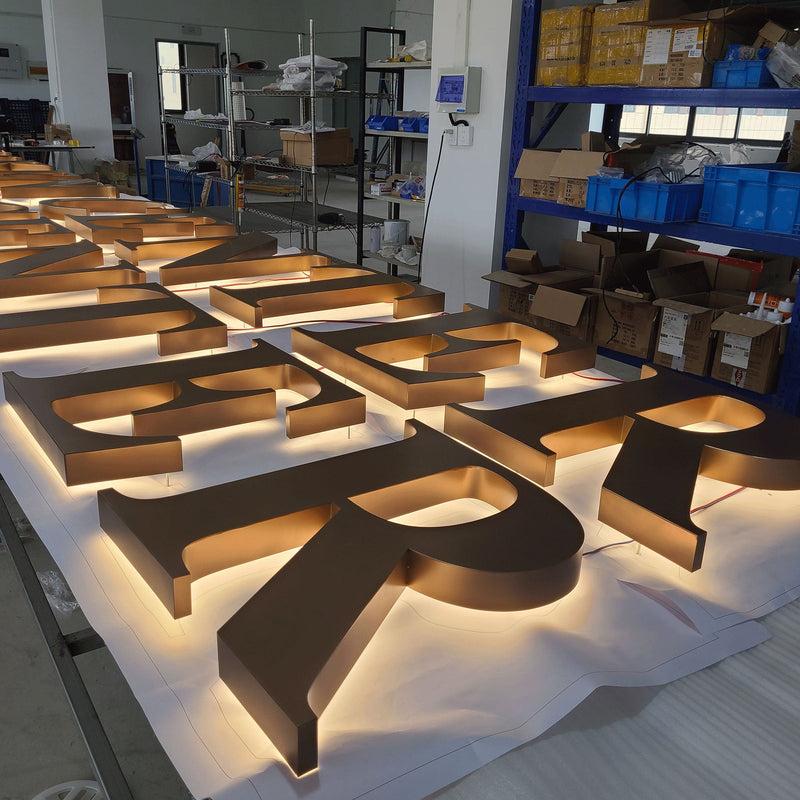
How to Inspect Custom Signage Quality Before Shipment: A B2B Buyer's Guide
Quality inspection is an essential part of custom architectural signage manufacturing. Before shipment, buyers should verify material specifications, fabrication accuracy, surface finishes, illumination performance, assembly structures, installation accessories, and packaging against approved project requirements.
For hotels, shopping malls, airports, healthcare facilities, commercial buildings, and residential developments, signage quality affects not only visual appearance but also installation efficiency, maintenance requirements, and long-term performance.
Unlike standardized products, custom signage systems often involve multiple materials, dimensions, finishes, and installation methods. A structured pre-shipment inspection process helps identify manufacturing discrepancies before products arrive at the project site.
As a custom architectural signage manufacturer in China, Maccan Signage supports project-based signage manufacturing through technical drawing development, material selection, fabrication, quality inspection, and international delivery.
Key Takeaways
-
Signage quality should be evaluated against approved drawings, material specifications, and physical samples.
-
Material verification and dimensional inspection are essential for consistent manufacturing.
-
Surface finishing and illumination should be checked under appropriate viewing conditions.
-
Outdoor signage requires additional consideration of environmental exposure, electrical protection, and installation structures.
-
Pre-shipment inspection should include installation accessories, product identification, and packaging.
-
Inspection criteria should be established before mass production rather than after manufacturing is completed.
1. Why Is Quality Inspection Important for Custom Signage Projects?
Custom signage projects often involve numerous individual components distributed across different floors, buildings, entrances, and public spaces.
Even relatively small manufacturing discrepancies can create installation difficulties when products must fit specific architectural locations.
Common quality-related risks include:
-
Incorrect product dimensions
-
Inconsistent surface colors and finishes
-
Visible welding or fabrication defects
-
Uneven LED illumination
-
Incorrect text, symbols, or directional information
-
Missing installation accessories
-
Damage during international transportation
For international buyers, identifying these issues before shipment is particularly important because replacement manufacturing and additional transportation may affect project schedules and procurement costs.
Quality inspection should therefore be considered part of the overall custom signage manufacturing process, rather than an isolated final-stage activity.
2. Material and Thickness Inspection
Material verification is one of the first steps in signage quality control.
Different signage applications require different materials depending on architectural design, installation conditions, environmental exposure, and maintenance expectations.
| Material | Common Applications | Key Inspection Points |
|---|---|---|
| Stainless Steel | Metal letters, architectural signs, decorative signage | Material grade, thickness, surface condition |
| Aluminum | Directional signs, outdoor signage, sign structures | Thickness, deformation, coating quality |
| Acrylic | Illuminated signs, lightboxes, decorative panels | Thickness, transparency, scratches, color |
| Brass | Luxury hotel signage, decorative lettering | Surface finish, color consistency, protection |
| LED Components | Illuminated letters and signage systems | Specifications, light color, electrical compatibility |
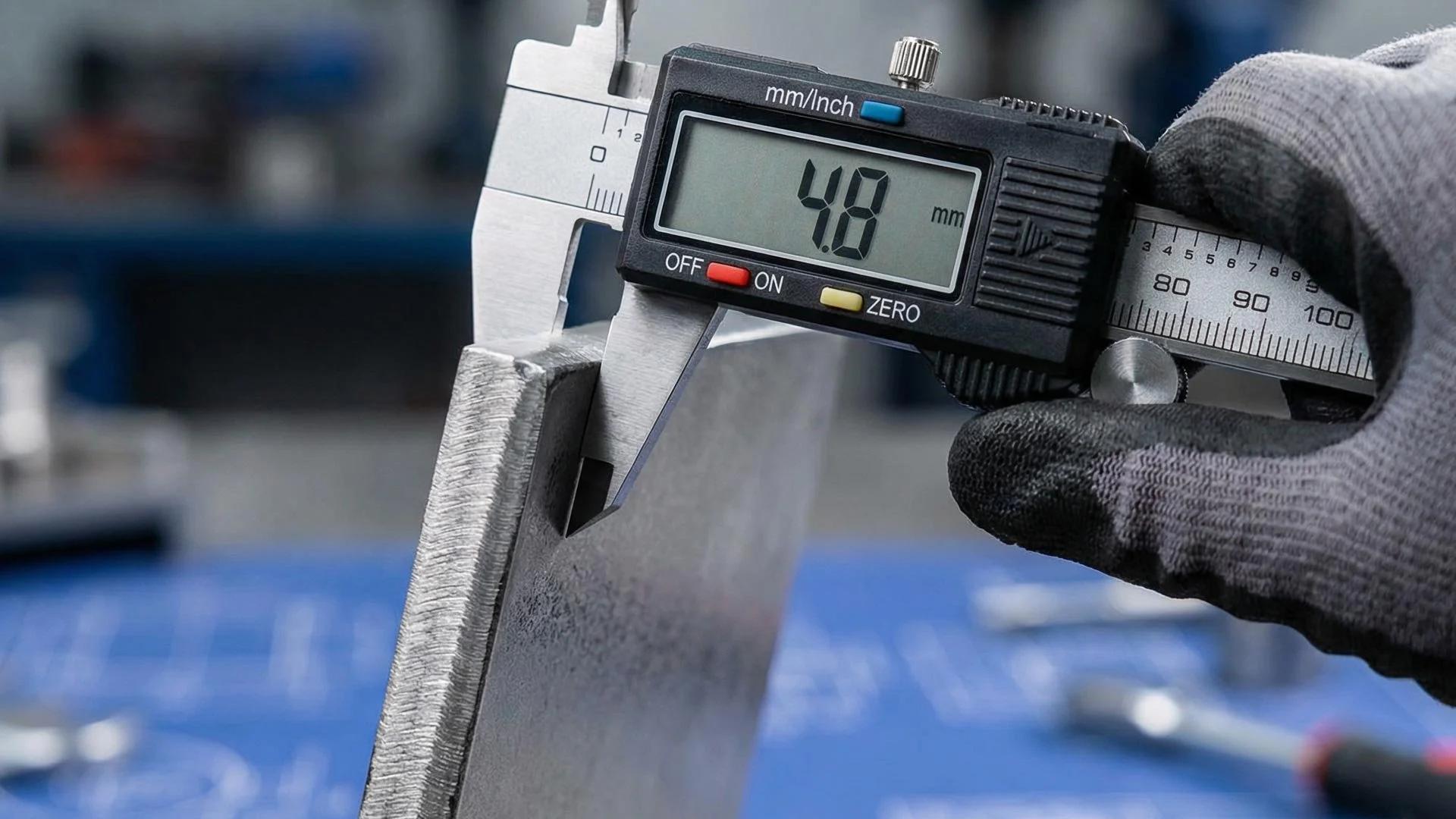
Buyers should confirm that the materials used in production match the approved project specifications.
For example, when a project specifies grade 316 stainless steel for certain outdoor applications, visual inspection alone is not sufficient to confirm the material grade.
Material documentation or appropriate verification methods may be required depending on the project.
For additional technical information about stainless steel grades, material properties, and corrosion resistance, buyers can consult the resources provided by worldstainless.
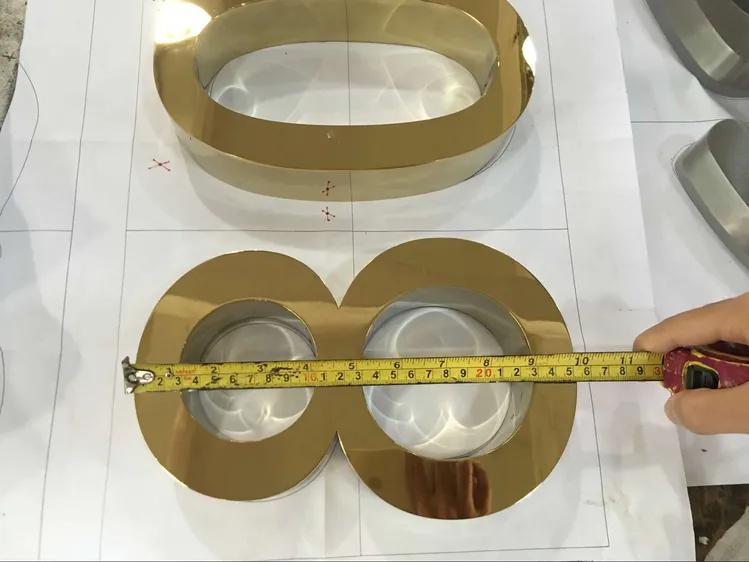
3. Dimensions and Fabrication Accuracy
Dimensional accuracy is particularly important for architectural signage installed on building façades, interior walls, reception areas, ceilings, and customized mounting structures.
Before production, manufacturers and buyers should confirm the approved technical drawings and dimensional requirements.
Inspection may include:
-
Overall width, height, and depth
-
Letter and logo proportions
-
Panel thickness
-
Mounting hole positions
-
Component alignment
-
Structural assembly dimensions
-
Text and graphic placement
For projects involving multiple signs of the same type, consistency between individual products should also be evaluated.
For example, hotel signage and wayfinding systems often include room number signs manufactured in batches. These products should maintain consistent dimensions, typography, mounting positions, and surface finishes.
Acceptable dimensional tolerances should be agreed upon according to the product design, manufacturing process, and installation requirements.
There is no single dimensional tolerance suitable for every custom signage product.
4. Surface Finish and Color Inspection
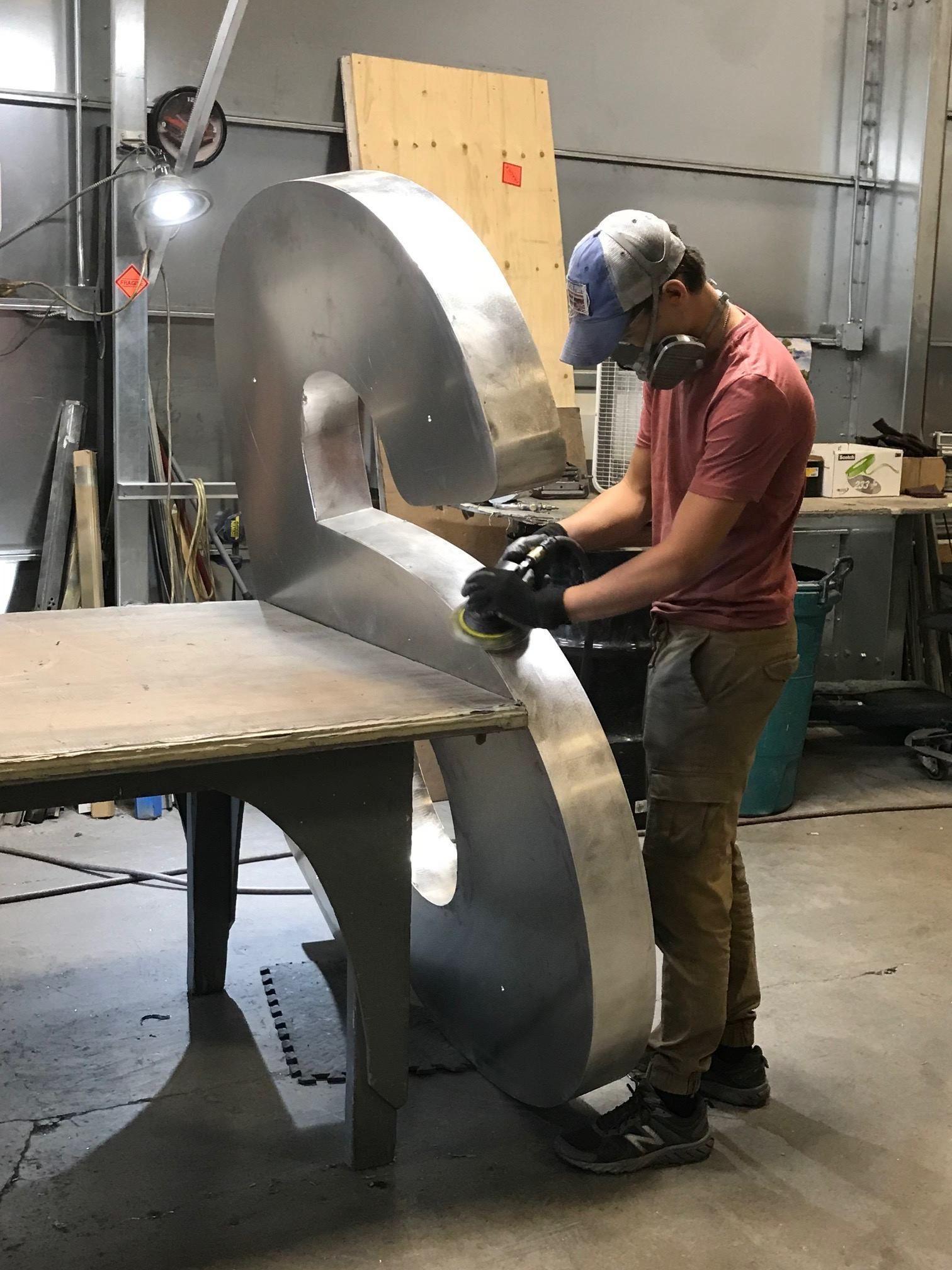
Surface finishing directly influences the appearance of architectural signage, particularly in luxury hotels, shopping malls, premium residential developments, and commercial interiors.
Common signage finishing processes include:
-
Spray painting
-
Powder coating
-
Brushed metal finishing
-
Mirror polishing
-
Anodizing
-
Decorative metal coatings
During inspection, buyers should evaluate whether the finished products match the approved samples and project specifications.
| Inspection Item | What to Check |
|---|---|
| Color Consistency | Differences between products and approved color samples |
| Surface Smoothness | Scratches, dents, bubbles, and visible irregularities |
| Edge Finishing | Burrs, sharp edges, and unfinished areas |
| Welding Areas | Visible gaps, deformation, and finishing defects |
| Brushed Finishes | Consistency of brushing direction and texture |
| Coating Appearance | Coverage, uniformity, and visible coating defects |
Color evaluation should be conducted under agreed lighting conditions where possible, particularly for metallic and decorative finishes.
If coating adhesion, thickness, or corrosion resistance is specified, appropriate testing methods and acceptance criteria should also be established.
5. LED and Electrical Performance Testing
Illuminated signage requires both visual inspection and appropriate electrical verification.
For illuminated channel letters, backlit logos, lightboxes, and architectural signage, the inspection process should evaluate the lighting effect as well as the compatibility of electrical components.
Key inspection points include:
-
LED module specifications
-
Power supply compatibility
-
Illumination uniformity
-
Color temperature consistency
-
Visible dark spots or light leakage
-
Wiring and connection conditions
-
Electrical protection requirements
-
Accessibility for future maintenance
Illuminated signage should be tested under suitable operating conditions before shipment.
For projects requiring a specified operating test duration, brightness level, or electrical performance standard, these requirements should be agreed upon before production.
International buyers should also confirm the applicable electrical safety and certification requirements in the destination market.
For example, UL 48 addresses electric signs in North America. Buyers can consult UL Standards & Engagement for information about relevant electrical signage standards.
Whether a specific certification or listing is required depends on the product, installation, and applicable local regulations.
6. Outdoor Signage Durability and Environmental Requirements
Outdoor architectural signage may be exposed to sunlight, rain, humidity, temperature changes, dust, wind, and coastal environmental conditions.
Material selection and protective measures should therefore reflect the actual installation environment.
| Installation Environment | Key Quality Considerations |
|---|---|
| Coastal Areas | Corrosion resistance, suitable fasteners, protective finishes |
| Hot Climates | Material stability, coating performance, electrical component suitability |
| High-Humidity Areas | Moisture protection, drainage, corrosion resistance |
| Dusty Environments | Enclosure protection and maintenance accessibility |
| High-Rise Buildings | Structural design, mounting systems, wind-load requirements |
For electrical enclosures, IEC 60529 provides a classification system for degrees of protection against access, solid foreign objects, and water, commonly known as IP ratings.
The International Electrotechnical Commission (IEC) provides information about international electrical and electronic standards.
However, an IP rating does not independently establish overall outdoor durability, corrosion resistance, or structural performance.
The required protection level should be determined according to the product configuration and installation environment.
For large façade signs and commercial building signage systems, structural requirements should also be reviewed by qualified engineering professionals in accordance with applicable local regulations.
7. Assembly and Installation Inspection
A signage product may meet visual requirements but still create installation difficulties if mounting details or accessories are incorrect.
Before shipment, manufacturers and buyers should review the installation requirements against approved technical drawings.
Inspection should include:
-
Mounting brackets and fixing points
-
Installation hole positions
-
Fasteners and connection components
-
Product assembly and alignment
-
Electrical cable positions
-
Installation templates where required
-
Product identification and installation references
For complex signage systems, trial assembly may be appropriate before packaging.
This is particularly relevant for large architectural letters, freestanding signs, multi-component structures, and customized wayfinding systems.
Clear installation drawings and organized accessories can help overseas contractors identify the correct installation methods and reduce avoidable on-site modifications.
8. Packaging and Pre-Shipment Inspection
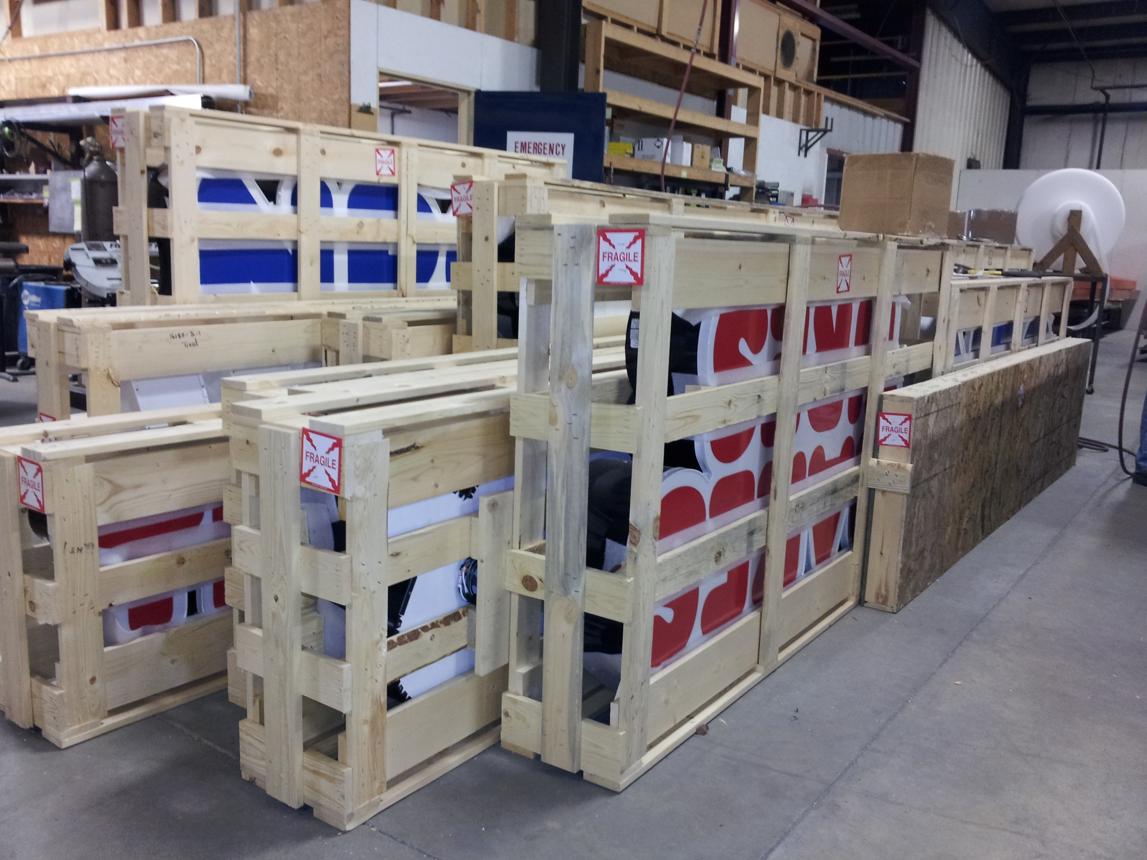
International transportation introduces additional risks, particularly for products with polished surfaces, decorative coatings, acrylic panels, illuminated components, and customized metal structures.
Packaging should be selected according to product dimensions, weight, surface sensitivity, and transportation requirements.
Before shipment, buyers should confirm:
-
Products are protected against surface abrasion.
-
Fragile components have appropriate cushioning.
-
Products are secured against movement inside packaging.
-
Installation accessories are organized and identified.
-
Package labels correspond with the project signage schedule.
-
Packing lists match the actual products and quantities.
-
Export packaging complies with applicable destination requirements.
Where regulated solid wood packaging is used, international phytosanitary requirements such as ISPM 15 may apply.
Buyers can consult the International Plant Protection Convention (IPPC) for information about international wood packaging requirements.
Appropriate packaging is an important part of signage quality management because damage during transportation can affect otherwise acceptable finished products.
9. Custom Signage Pre-Shipment Inspection Checklist
The following checklist provides a practical reference for international signage buyers, procurement teams, and project contractors.
| Inspection Category | Inspection Requirements |
|---|---|
| Material Verification | Confirm material type, grade, and thickness |
| Dimensions | Verify dimensions against approved drawings |
| Text and Graphics | Check spelling, symbols, logos, and directional information |
| Fabrication | Inspect welding, joints, edges, and assembly |
| Surface Finishing | Check color, texture, scratches, and coating appearance |
| Illumination | Verify lighting uniformity and specified light color |
| Electrical Components | Check component specifications and applicable safety requirements |
| Mounting Structure | Confirm brackets, fixing points, and installation accessories |
| Quantity | Verify products against the approved signage schedule |
| Packaging | Check protection, identification, and packing lists |
| Documentation | Review required drawings, inspection records, and installation instructions |
This checklist should be adapted to the specific project rather than treated as a universal acceptance standard.
For large-volume orders, buyers and manufacturers should agree on whether inspections will cover every product or follow an appropriate sampling plan.
Documenting acceptance criteria before production helps both parties evaluate quality using the same requirements.
10. Quality Control in Custom Signage Manufacturing at Maccan Signage
Maccan Signage specializes in customized architectural signage and wayfinding systems for commercial and public environments.
Operating a manufacturing facility in Shenzhen, China, Maccan Signage supports project-based production through coordinated technical development, fabrication, finishing, assembly, and delivery.
Our manufacturing capabilities include:
-
Technical drawing development and production coordination
-
Material selection and sample preparation
-
Customized metal fabrication
-
Surface finishing and decorative treatments
-
Illuminated signage manufacturing
-
Finished product quality inspection
-
Packaging and international delivery coordination
-
Installation guidance and after-sales support
For projects involving multiple signage categories, coordination between design requirements, material specifications, fabrication processes, and installation details is particularly important.
Whether a project involves hotel room signage, shopping mall directories, commercial building identification, or large-scale architectural lettering, inspection requirements should reflect the actual product specifications and installation environment.
Learn more about our in-house signage manufacturing capabilities and explore our custom architectural signage and wayfinding solutions for different industries.
11. Frequently Asked Questions
What should be checked before custom signage is shipped?
Buyers should check materials, dimensions, surface finishes, text accuracy, assembly structures, illumination, electrical components, installation accessories, product quantities, and packaging against approved project specifications.
How can buyers verify stainless steel quality in signage products?
Buyers can request material documentation and appropriate material verification when necessary. Surface appearance alone cannot reliably establish the stainless steel grade.
How can color consistency be maintained across a large signage project?
Approved physical samples, defined color references, consistent production processes, and agreed inspection conditions can help maintain color consistency across different signage products.
How long should illuminated signage be tested before shipment?
There is no universal testing duration suitable for every illuminated signage product. The operating test duration should be determined according to the product configuration, electrical components, project specifications, and applicable requirements.
Is an IP rating sufficient to guarantee outdoor signage durability?
No. IP ratings address specified enclosure protection against access, solid foreign objects, and water. Outdoor durability also depends on materials, corrosion resistance, UV exposure, structural design, electrical components, and maintenance.
Can overseas buyers arrange third-party signage inspection?
Buyers can arrange independent pre-shipment inspections by agreement with the manufacturer. The inspection scope, acceptance criteria, timing, and associated costs should be confirmed in advance.
What documents should buyers request before signage shipment?
Depending on the project, buyers may request approved production drawings, material specifications, inspection records, product photographs, packing lists, installation instructions, and applicable certification documents.
Conclusion
Effective signage quality control begins with clearly defined project specifications and continues through material selection, fabrication, surface finishing, assembly, electrical verification, and packaging.
For international architectural signage projects, a structured pre-shipment inspection process helps buyers identify manufacturing discrepancies before delivery and supports more efficient installation.
Selecting a signage manufacturing partner with appropriate production capabilities, technical coordination, and quality inspection procedures is an important part of managing procurement risks.
Looking for a Custom Architectural Signage Manufacturer?
Maccan Signage provides customized architectural signage and wayfinding manufacturing solutions for hotels, shopping malls, airports, commercial buildings, healthcare facilities, educational institutions, and residential developments.
Whether you are planning a new commercial development or sourcing signage for an existing property, our team can review your project drawings, material requirements, quality inspection criteria, and manufacturing needs.
Contact Maccan Signage to discuss your custom signage project and request a quotation.
Maccan Signage
Website: www.maccansignage.com
Email: info@maccansignage.com
WhatsApp: +852 6959 3497
Technical References
-
worldstainless — Stainless steel materials and technical resources.
-
UL Standards & Engagement — Electrical product and electric sign standards.
-
International Electrotechnical Commission — International electrical standards and enclosure protection classifications.
-
International Plant Protection Convention — International phytosanitary standards and wood packaging requirements.
These references provide general technical and regulatory context. Applicable standards, testing requirements, and certifications should be confirmed according to the specific product, destination market, and project requirements. References to these standards do not imply that every product manufactured by Maccan Signage holds the corresponding certification.
Aluminum vs. Stainless Steel vs. Acrylic: How to Choose Materials for Outdoor Channel Letters
Related Article