Aluminum vs. Stainless Steel vs. Acrylic: How to Choose Materials for Outdoor Channel Letters
Aluminum vs. Stainless Steel vs. Acrylic: How to Choose Materials for Outdoor Channel Letters
A Practical Material Selection Guide for Commercial Signage Buyers
Outdoor channel letters are widely used for commercial buildings, shopping malls, hotels, retail stores, and corporate facilities. Beyond their visual impact, these signs must withstand changing weather conditions, temperature fluctuations, moisture, and long-term exposure to sunlight.
For architects, contractors, signage distributors, and project procurement teams, selecting the right construction material is an important decision.
Aluminum, stainless steel, and acrylic each serve different purposes in channel letter manufacturing. Their performance depends not only on the material itself but also on the sign's construction, finishing, illumination system, installation environment, and maintenance requirements.
This guide explains how to compare these materials and select the most suitable construction for your outdoor signage project.
1. Understanding the Role of Each Material
Before comparing materials, it is important to understand that aluminum, stainless steel, and acrylic are not always direct alternatives.
A typical illuminated channel letter may combine several materials:
-
Aluminum: Commonly used for letter returns, backs, and supporting components.
-
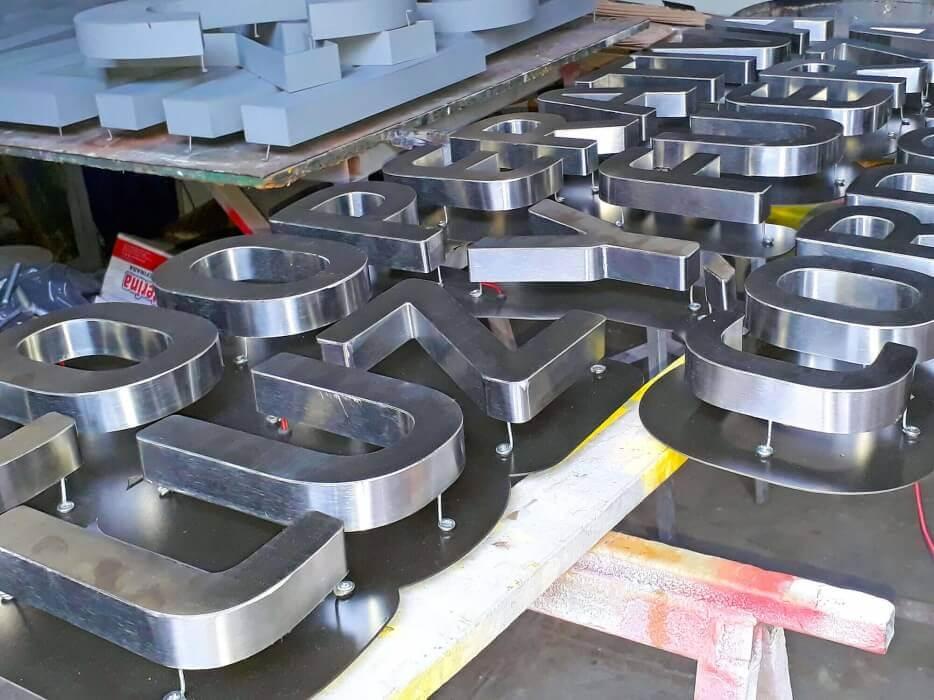
Stainless steel: Used for premium metal letter bodies, returns, backs, and decorative finishes.
-
Acrylic: Frequently used for illuminated letter faces, translucent components, and certain fabricated letter bodies.
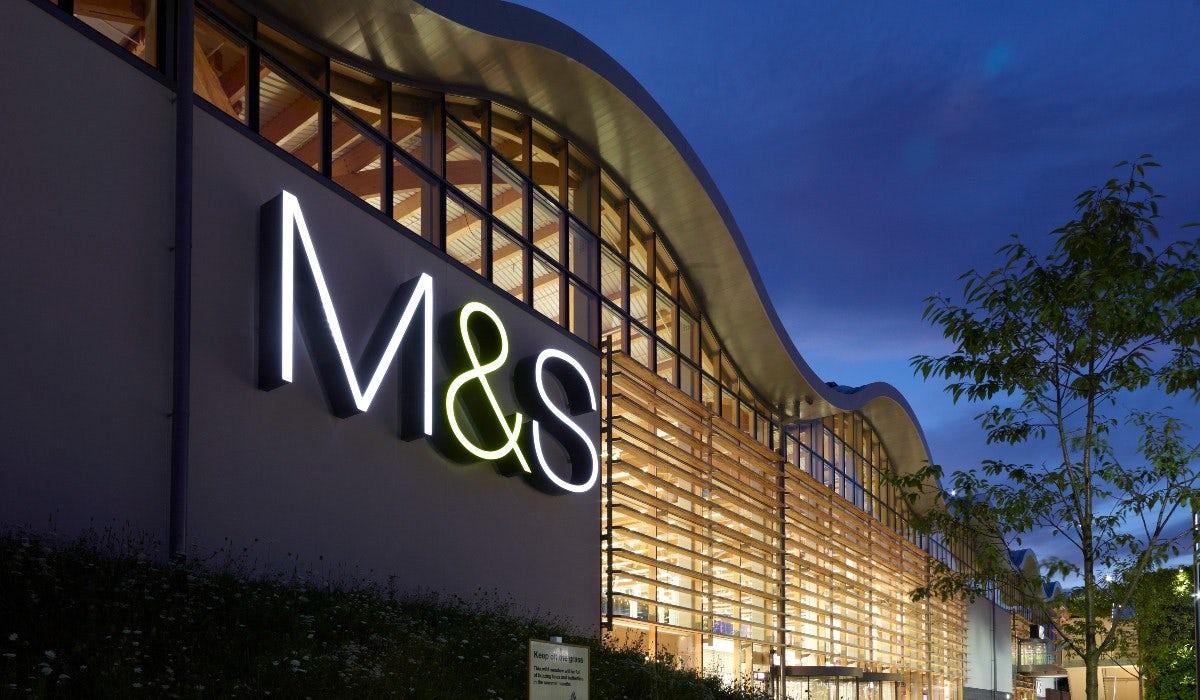
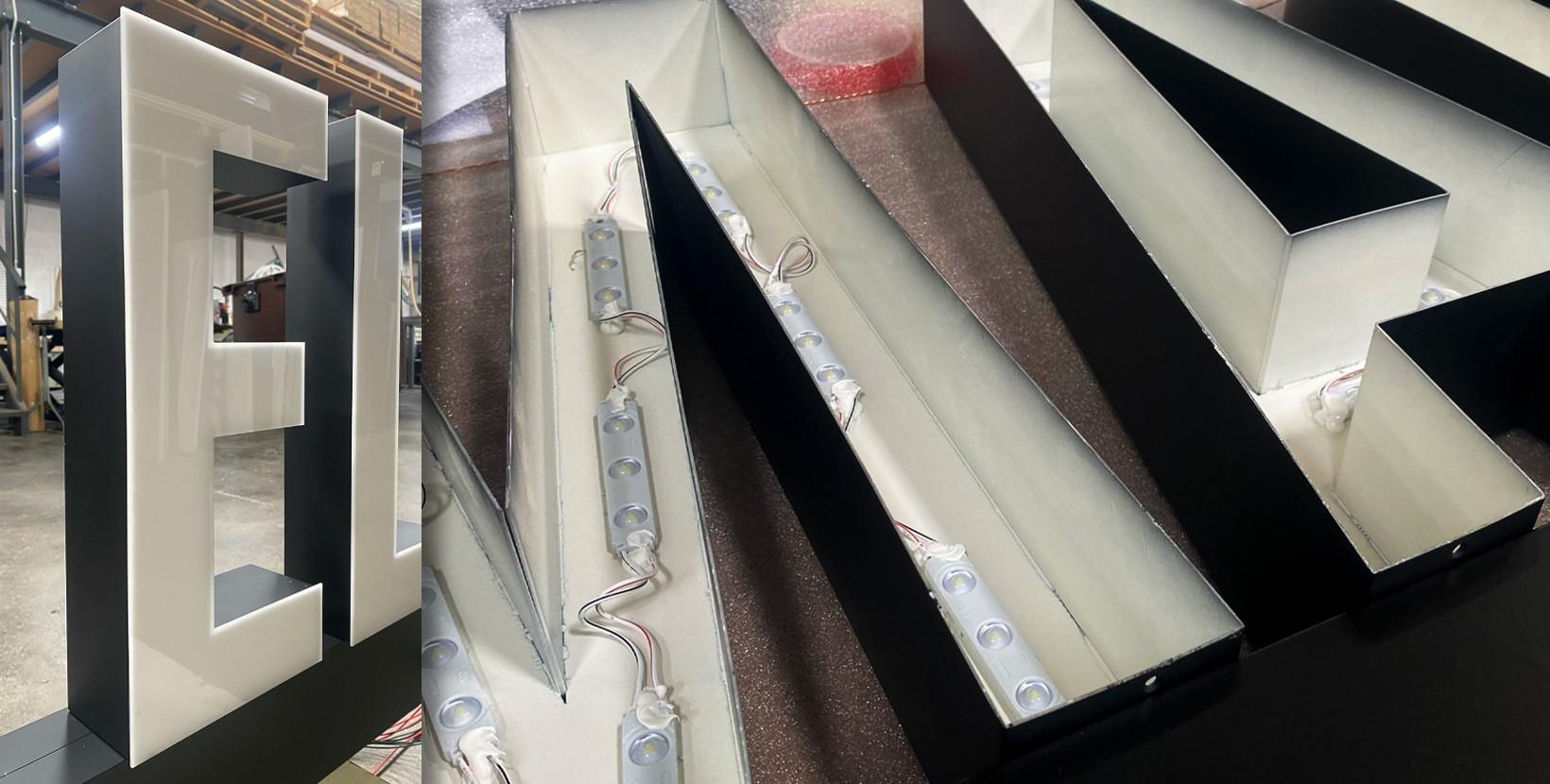
For example, a front-lit channel letter may use an aluminum body, an acrylic face, and an internal LED illumination system.
Therefore, material selection should consider the entire sign construction rather than choosing only one material.
2. Aluminum Channel Letters: Lightweight and Cost-Effective
Aluminum is one of the most widely used materials for outdoor channel letter construction.
Its relatively low weight, corrosion resistance, and fabrication flexibility make it suitable for many commercial signage applications.
Key Advantages
Lightweight construction
Aluminum has a lower density than stainless steel, helping reduce the weight of large letters and potentially simplifying handling and installation.
Good corrosion resistance
Aluminum naturally forms a protective oxide layer. With suitable finishing and fabrication, it performs well in many outdoor environments.
Flexible finishing options
Aluminum channel letters can be painted or powder-coated in different colors to match corporate branding and architectural requirements.
Practical manufacturing costs
For many standard commercial projects, aluminum offers a cost-effective balance of appearance, performance, and fabrication efficiency.
Potential Limitations
-
Thin or poorly supported aluminum components may deform under mechanical loads.
-
Surface finishing quality affects long-term appearance.
-
Coastal and aggressive environments require careful material grade, coating, and fastening selection.
-
Large letters may require additional structural reinforcement.
Recommended Applications
Aluminum is particularly suitable for:
-
Shopping mall exterior signage
-
Retail chain storefronts
-
Commercial building identification
-
Large illuminated brand letters
-
Multi-location signage rollouts
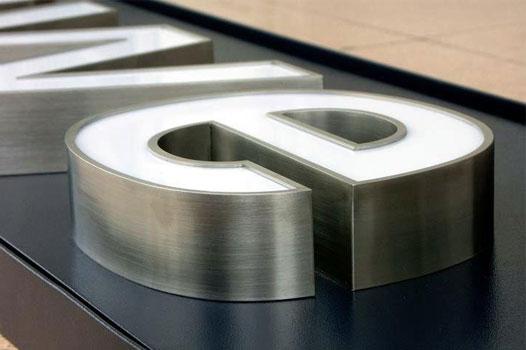
3. Stainless Steel Channel Letters: Premium Appearance and Structural Rigidity
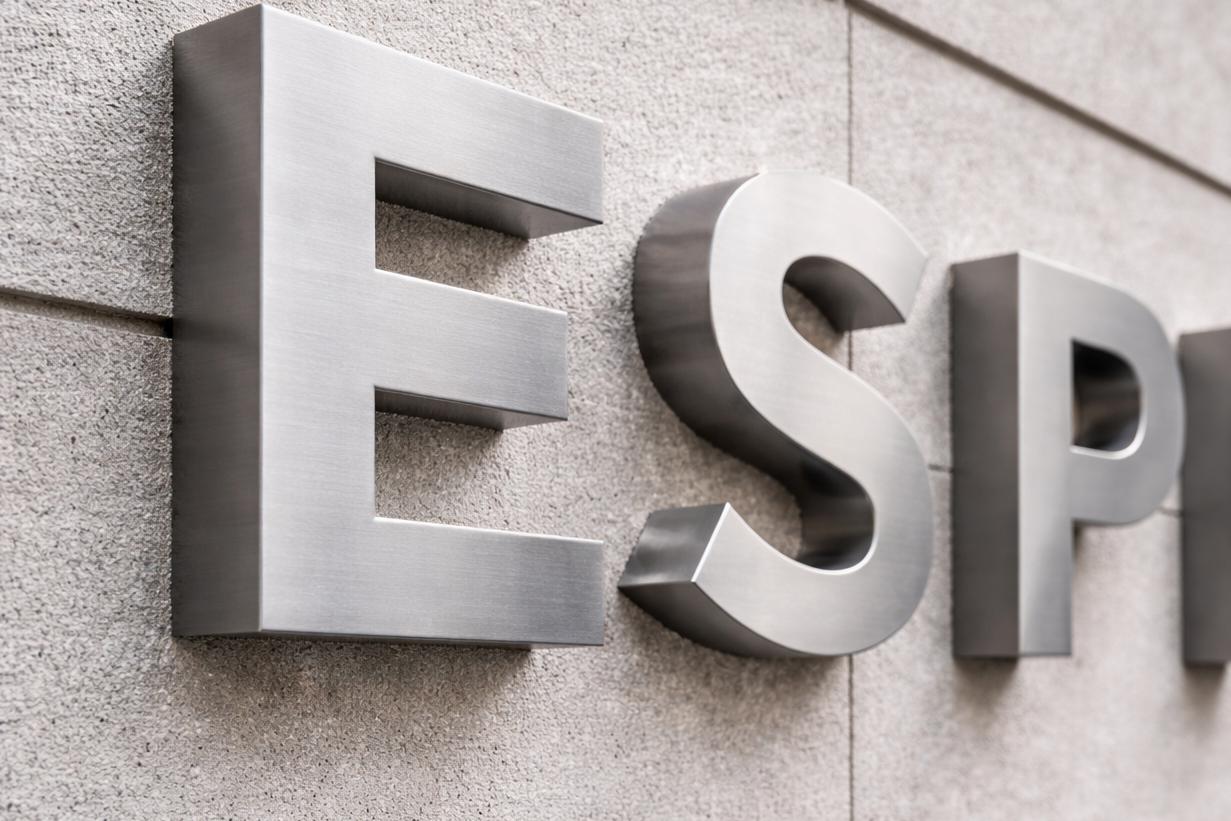
Stainless steel is commonly selected for architectural signage projects where visual quality, metal finishing, and long-term durability are priorities.
It is particularly popular for premium building identification signs and decorative metal letters.
Key Advantages
Premium architectural appearance
Stainless steel can be produced with brushed, polished, or other decorative finishes, making it suitable for high-end commercial environments.
High rigidity
Compared with aluminum of similar dimensions, stainless steel generally provides greater stiffness, although actual performance depends on thickness and construction.
Corrosion-resistant options
Appropriate stainless steel grades can provide excellent corrosion resistance in outdoor environments.
Suitable for custom fabrication
Stainless steel can be used to manufacture precision-built letters with welded or fabricated metal returns and backs.
Potential Limitations
-
Stainless steel is substantially heavier than aluminum.
-
Material and fabrication costs are often higher.
-
Cutting, welding, polishing, and finishing require careful workmanship.
-
Stainless steel is not immune to corrosion, particularly when an unsuitable grade is used near the coast.
304 vs. 316 Stainless Steel
For outdoor channel letters, buyers should understand the difference between commonly specified stainless steel grades.
| Material | General Characteristics | Typical Consideration |
|---|---|---|
| 304 stainless steel | Good general corrosion resistance | Many standard outdoor architectural applications |
| 316 stainless steel | Improved resistance to chloride-related corrosion | Coastal or chloride-exposed environments |
| Painted stainless steel | Customizable appearance depending on substrate and coating | Projects requiring specific brand colors |
Important: Stainless steel grade selection should be based on actual exposure conditions, including salt spray, pollution, cleaning chemicals, and maintenance practices. Grade 316 is not a guarantee against all forms of corrosion.
Recommended Applications
Stainless steel is particularly suitable for:
-
Luxury hotels and resorts
-
Premium commercial buildings
-
Architectural building identification
-
High-end retail developments
-
Projects requiring decorative metal finishes
4. Acrylic Channel Letters: Light Transmission and Design Flexibility
Acrylic, also known as PMMA, is especially important in illuminated channel letter construction.
Unlike aluminum and stainless steel, acrylic is a non-metallic material valued for its optical properties, color options, and fabrication flexibility.
It is commonly used for front-lit letter faces, translucent elements, and certain fabricated letter designs.
Key Advantages
Excellent light transmission
Suitable sign-grade acrylic allows LED illumination to pass through the letter face, creating bright and uniform visual effects when the lighting system is correctly designed.
Wide range of colors
Acrylic is available in different colors, finishes, and levels of translucency.
Flexible design possibilities
It can be cut, formed, and fabricated into custom letter faces and three-dimensional shapes.
Suitable for illuminated signage
Acrylic is widely used for front-lit, side-lit, and other illuminated sign designs.
Potential Limitations
-
Acrylic generally has lower impact resistance than polycarbonate.
-
Incorrect thickness, support, or fabrication may lead to cracking or deformation.
-
Thermal expansion must be considered during design and installation.
-
Long-term weather performance depends on the acrylic grade, pigmentation, fabrication, and environmental exposure.
For outdoor applications, buyers should specify UV-stable, exterior-grade acrylic rather than assuming that every acrylic sheet is suitable for long-term outdoor use.
Recommended Applications
Acrylic is particularly suitable for:
-
Front-lit channel letter faces
-
Illuminated retail signage
-
Brand logos with custom colors
-
Translucent lettering
-
Specialty illuminated letter constructions
5. Aluminum vs. Stainless Steel vs. Acrylic: Material Comparison
The following table summarizes the practical differences buyers should consider.
| Selection Factor | Aluminum | Stainless Steel | Acrylic |
|---|---|---|---|
| Typical role | Letter body, returns, backs | Premium metal body, returns, backs | Illuminated faces, translucent components |
| Relative weight | Lightweight | Heavy | Lightweight |
| Corrosion / weather performance | Good with suitable finish | Grade-dependent; excellent with appropriate selection | Depends on exterior-grade formulation and fabrication |
| Structural rigidity | Good with proper design | Generally high | More limited for load-bearing applications |
| Decorative options | Painted, powder-coated, metallic finishes | Brushed, polished, decorative finishes | Colored, translucent, opaque |
| Illumination compatibility | Commonly paired with acrylic faces or halo lighting | Commonly paired with acrylic or halo lighting | Excellent for light-transmitting faces |
| Relative cost | Often economical | Often higher | Depends on grade, thickness, and fabrication |
| Common use | Commercial and retail signage | Premium architectural signage | Illuminated sign faces and specialty letters |
Note: These are qualitative comparisons, not universal performance ratings. Actual cost and service life depend on specifications, design, manufacturing quality, and site conditions.
Which Material Offers the Best Value?
There is no single material that is best for every outdoor channel letter project.
For many standard illuminated commercial signs, an aluminum body combined with an exterior-grade acrylic face provides an effective balance of weight, appearance, and cost.
For premium architectural applications, stainless steel construction may be preferred when metal appearance and rigidity are important.
For illuminated signs requiring vibrant colors and uniform light output, acrylic is often an essential component, even when the main letter body is made of metal.
6. How Should Buyers Select Materials for Different Environments?
Material selection should begin with the installation environment and project requirements.
Coastal and High-Humidity Locations
Signs installed near the ocean may be exposed to chloride-containing moisture and salt deposits.
Buyers should evaluate:
-
Aluminum coating and corrosion protection
-
Appropriate stainless steel grades, potentially including 316
-
Corrosion-resistant fasteners and compatible materials
-
Sealed electrical components and drainage provisions
-
Cleaning and maintenance requirements
Dissimilar metal connections should also be evaluated to reduce the risk of galvanic corrosion.
High-Rise Commercial Buildings
For large channel letters installed at height, wind loading and attachment design are critical.
Important considerations include:
-
Letter dimensions and projected area
-
Wind exposure and local building requirements
-
Material thickness and internal reinforcement
-
Mounting brackets and substrate capacity
-
Access for future maintenance
A heavier material does not automatically create a better sign. The complete structural and installation design must be evaluated.
Hot and Sunny Climates
In regions with strong sunlight and high temperatures, buyers should consider:
-
UV-stable acrylic grades
-
Coating durability and color retention
-
Thermal expansion and movement allowances
-
LED heat management
-
Weather-resistant electrical components
Premium Hospitality and Commercial Developments
Where architectural appearance is a priority, stainless steel may be selected for its decorative metal finish.
However, aluminum with a carefully specified coating can also achieve a high-quality appearance at a different cost and weight.
7. Material Selection by Project Type
| Project Type | Commonly Suitable Construction | Main Consideration |
|---|---|---|
| Shopping mall exterior | Aluminum body + acrylic face | Large-format illumination and cost efficiency |
| Retail chain storefront | Aluminum body + acrylic face | Consistent branding across multiple locations |
| Luxury hotel entrance | Stainless steel body or decorative metal letters | Architectural finish and visual quality |
| Coastal commercial property | Protected aluminum or appropriately specified stainless steel | Corrosion exposure and maintenance |
| High-rise building identification | Engineered aluminum or stainless steel construction | Wind loading, weight, and attachment |
| Illuminated brand logo | Metal body + custom acrylic components | Light distribution and brand color accuracy |
These recommendations are starting points. Final construction should be determined through project-specific engineering and manufacturing review.
8. What Should Buyers Confirm Before Ordering Outdoor Channel Letters?
Material selection is only one part of the purchasing process.
Before requesting a quotation, procurement teams should prepare the following information:
1. Letter dimensions and quantities
Provide the approximate height, width, depth, and number of letters.
2. Installation location
Specify whether the signs will be installed on a storefront, facade, rooftop, canopy, or another architectural surface.
3. Environmental conditions
Identify coastal exposure, strong sunlight, high humidity, extreme temperatures, or other relevant conditions.
4. Illumination requirements
Confirm whether the project requires front-lit, halo-lit, or non-illuminated letters.
5. Material and finish preferences
Specify aluminum, stainless steel, acrylic, coating colors, or decorative finishes where known.
6. Drawings and brand standards
Provide logo artwork, architectural elevations, installation drawings, or relevant brand guidelines.
7. Electrical and compliance requirements
Confirm local electrical, building, fire safety, and signage requirements.
For projects in the United States, applicable sign and electrical requirements may include relevant provisions of the National Electrical Code and product certification requirements such as UL 48, depending on the installation and jurisdiction.
[EXTERNAL LINK — Suggested Authority]
UL Solutions — Electric Signs (UL 48):
https://www.ul.com/services/electric-signs-ul-48
National Electrical Code information — NFPA:
https://www.nfpa.org/
Buyers should confirm the latest applicable requirements with their local authority and qualified electrical or installation professionals.
9. Why Manufacturing Quality Matters as Much as Material Choice
Even high-quality materials may perform poorly if the signage is incorrectly designed or fabricated.
Important manufacturing details include:
-
Accurate metal cutting and letter forming
-
Proper welding, fastening, and joint finishing
-
Suitable surface preparation and coatings
-
Even LED placement and light distribution
-
Weather-resistant wiring and electrical protection
-
Drainage and moisture management
-
Secure packaging for international transportation
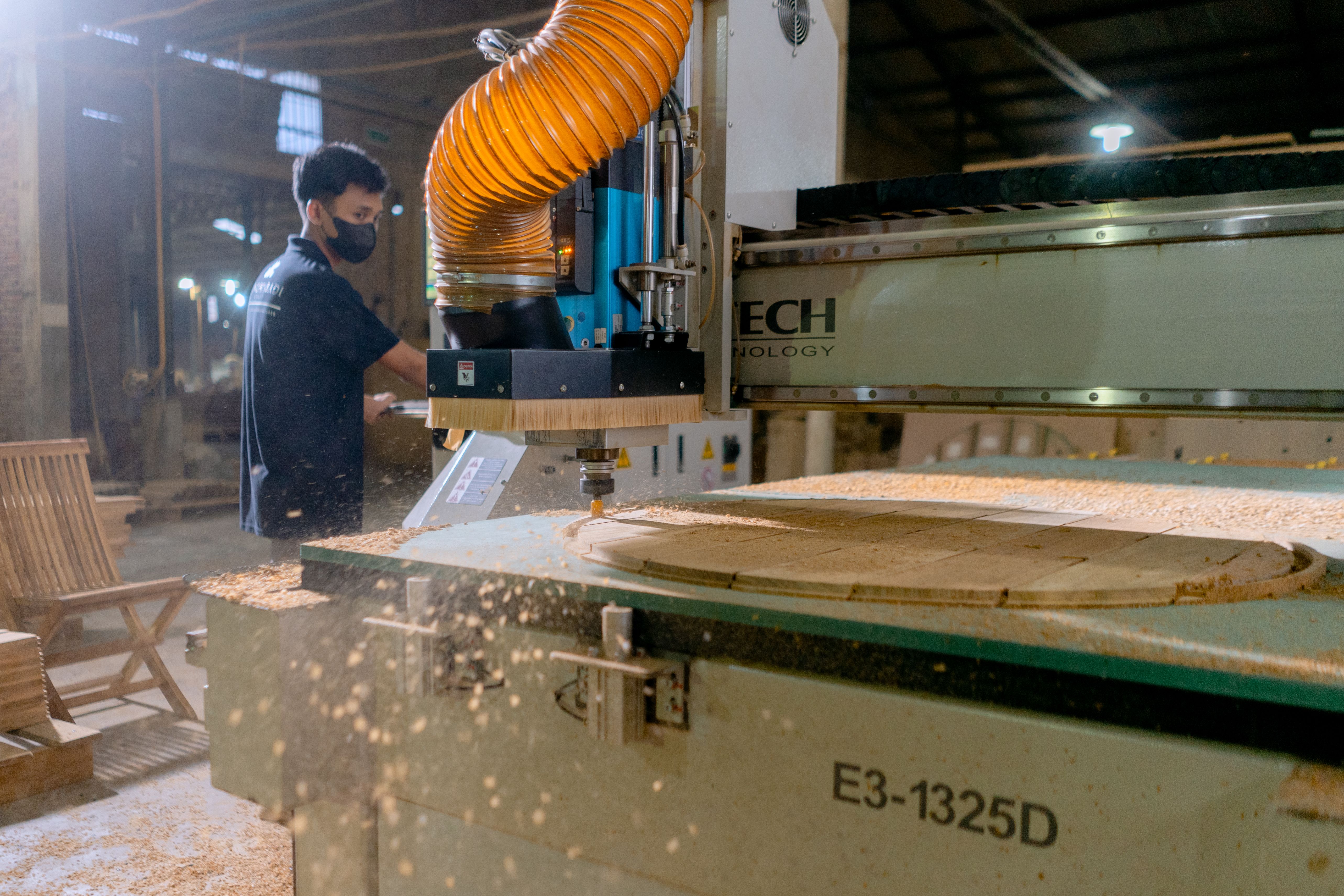
At Maccan Signage, we provide custom signage manufacturing solutions for commercial buildings, shopping malls, hotels, and other architectural projects.
Our production capabilities support metal fabrication, acrylic processing, LED integration, surface finishing, and custom signage manufacturing based on project specifications.
We work with project buyers, signage contractors, and commercial clients to develop practical signage constructions that balance appearance, durability, and manufacturing requirements.
[INTERNAL LINK — Commercial Signage Solutions]
Explore our custom signage applications:
https://www.maccansignage.com/solutions.html
10. Frequently Asked Questions
Q1. Is aluminum or stainless steel better for outdoor channel letters?
Aluminum is often preferred for lightweight, cost-effective illuminated letters. Stainless steel is commonly selected for premium metal finishes and greater rigidity. The best choice depends on the project environment, design, budget, and installation requirements.
Q2. Can acrylic channel letters be used outdoors?
Yes. Exterior-grade acrylic can be used outdoors, particularly for illuminated faces and certain fabricated letter designs. Proper thickness, support, UV resistance, and thermal expansion allowances are important.
Q3. Which material is best for coastal outdoor signage?
There is no universal answer. Properly coated aluminum and appropriately selected stainless steel, including 316 where justified, may both be suitable. The final choice should consider chloride exposure, fasteners, coatings, drainage, and maintenance.
Q4. Are stainless steel channel letters more expensive than aluminum?
They often have higher material and fabrication costs, but the difference depends on the grade, thickness, finish, dimensions, and production complexity.
Q5. What is the most common construction for illuminated channel letters?
A common front-lit construction uses a metal body, frequently aluminum, combined with a translucent acrylic face and internal LED modules.
Q6. How long do outdoor channel letters last?
There is no universal lifespan. Service life depends on material selection, surface protection, LED and power supply quality, weather exposure, installation, and maintenance. Buyers should request project-specific warranty terms and component specifications.
Conclusion: Choose the Complete Construction, Not Just the Material
For outdoor channel letters, material selection should be based on the intended application rather than appearance or price alone.
Aluminum offers a practical combination of low weight, fabrication flexibility, and cost efficiency.
Stainless steel is well suited to premium architectural applications where decorative metal finishes and rigidity are priorities.
Acrylic plays a vital role in illuminated signage by providing light transmission, color options, and design flexibility.
In many cases, the most effective outdoor channel letter is a carefully engineered combination of these materials.
Planning an Outdoor Channel Letter Project?
Maccan Signage provides custom channel letter manufacturing and architectural signage solutions for international B2B projects.
Share your drawings, dimensions, installation location, and material preferences with our team to discuss a suitable manufacturing approach.
[CTA BUTTON: Request a Custom Signage Quote]
Website: https://www.maccansignage.com
Email: info@maccansignage.com
WhatsApp: +852 6959 3497
How to Inspect Custom Signage Quality Before Shipment: A B2B Buyer's Guide
How to Maintain Consistency Across Shopping Mall Wayfinding Signage
Related Article