How to Choose the Right Wayfinding Signage for Commercial Projects

How to Choose the Right Wayfinding Signage for Commercial Projects?
Choosing the right wayfinding signage is an important part of planning a commercial environment. In shopping malls, hotels, office buildings, healthcare facilities and other large-scale projects, signage needs to do more than provide directions. It should communicate information clearly, support smooth navigation and complement the overall architectural and interior design.
For project owners, architects, designers and contractors, selecting the right signage system requires careful consideration of the project environment, information hierarchy, materials, lighting, branding and installation requirements.
1. Consider the Project Environment
The first step is to understand where the signage will be installed.
Indoor and outdoor environments have different requirements. Shopping malls, hotels and office buildings may require a combination of directional signs, directory signs, room identification signs and facility identification signs.
For outdoor applications, weather resistance, UV exposure, corrosion resistance and structural stability are especially important.
2. Plan the Information Hierarchy
Effective wayfinding signage should communicate information clearly and quickly.
A complete signage system may include directional signage, identification signage, directory signs, parking signage, regulatory signs, room identification and emergency or safety signage.
The information hierarchy should remain consistent throughout the project, allowing visitors to understand the system easily and find their destinations efficiently.
3. Choose the Right Materials
Different projects require different materials, finishes and manufacturing methods.
Common signage materials include stainless steel, aluminum, acrylic, brass, aluminum composite materials, glass and wood-based finishes.
Material selection should consider durability, appearance, maintenance requirements, installation conditions and project budget.
For high-traffic commercial environments, durable materials and appropriate surface treatments can help extend the service life of the signage system.
4. Consider Lighting Requirements
Lighting can significantly affect the visibility and appearance of signage.
Depending on the application, projects may use non-illuminated signage, front-lit signage, back-lit signage, edge-lit acrylic signage or LED illuminated letters.
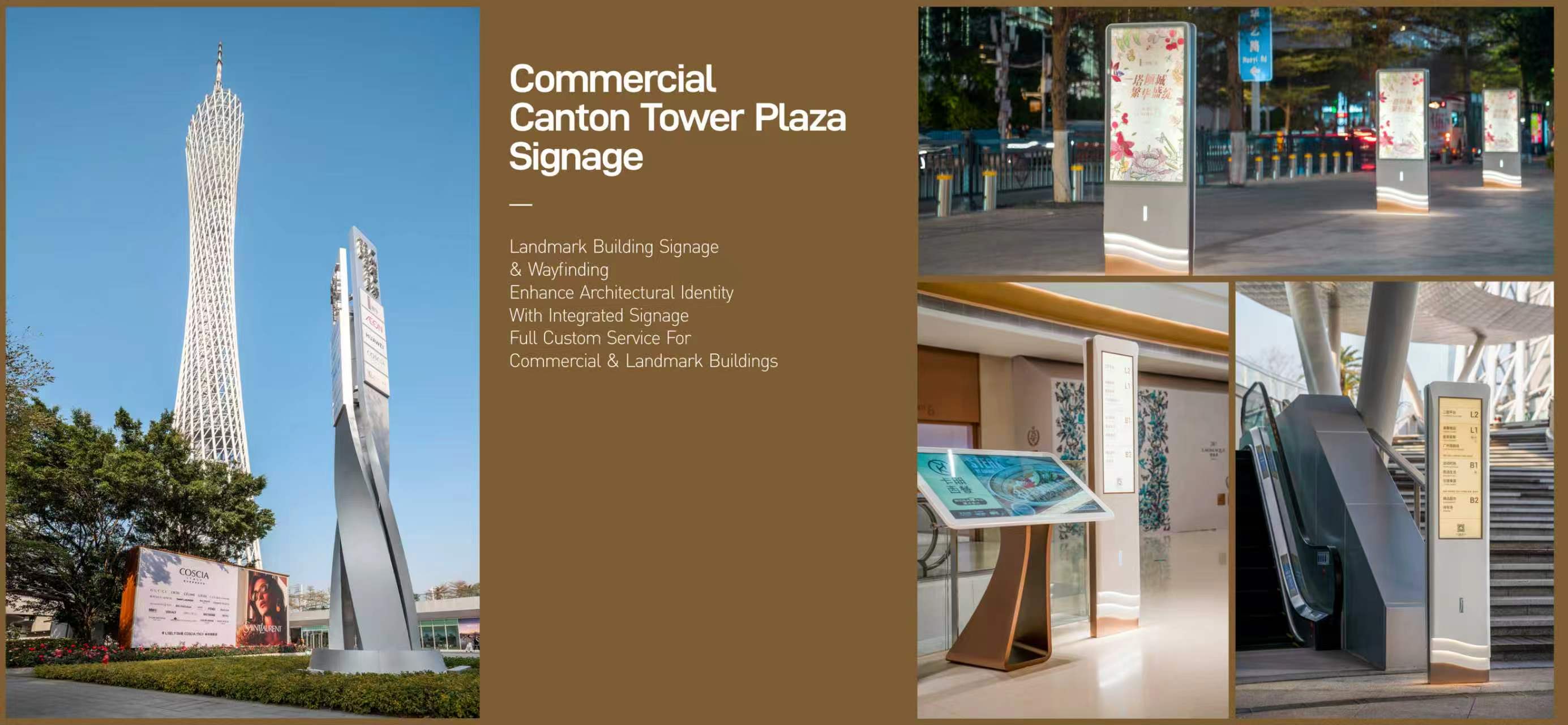
For hotels, shopping malls and commercial buildings, illuminated signage can also become part of the overall architectural and interior design.
5. Maintain Consistent Visual Design
A successful wayfinding system should be functional while also fitting the visual identity of the project.
Typography, colors, symbols, icons, materials and finishes should remain consistent across different types of signage.
For hotels, retail brands and chain stores, signage should also follow the project's brand guidelines to create a unified customer experience.
6. Plan for Installation and Maintenance
Signage design should consider installation and future maintenance from the beginning.
Fixing methods, wall conditions, ceiling structures, electrical requirements and access for maintenance can all affect the final design.
Working with an experienced signage manufacturer during the engineering stage can help identify potential installation issues before production begins and improve efficiency during project execution.
7. Work With an Experienced Signage Manufacturer
For large commercial projects, signage is more than a collection of individual signs. It is a complete wayfinding system that needs to function consistently across the entire environment.
An experienced signage manufacturer can provide support throughout the project, including:
Design → Engineering → Prototyping → Manufacturing → Quality Control → Packing → Installation Support
At Maccan Signage, we provide custom signage and wayfinding solutions for hotels, shopping malls, airports, commercial buildings, healthcare facilities, schools and retail projects.
From design and engineering to manufacturing, we work with project owners, architects, designers, contractors and brand teams to develop signage solutions tailored to each project's requirements.
Final Thoughts
The right wayfinding signage system should combine clear information, functional design, durable materials and consistent visual identity.
By considering the project environment, information hierarchy, materials, lighting, branding and installation requirements from the beginning, businesses can create a signage system that improves navigation while enhancing the overall visitor experience.
Looking for a custom wayfinding signage manufacturer for your next project?
Contact Maccan Signage to discuss your project requirements.
Website: //www.maccansignage.com
Email: info@maccansignage.com
WhatsApp: +86 136 3278 9975
