School Wayfinding Signage: How to Create a Clear and Safe Campus Navigation System
School Wayfinding Signage: How to Create a Clear and Safe Campus Navigation System
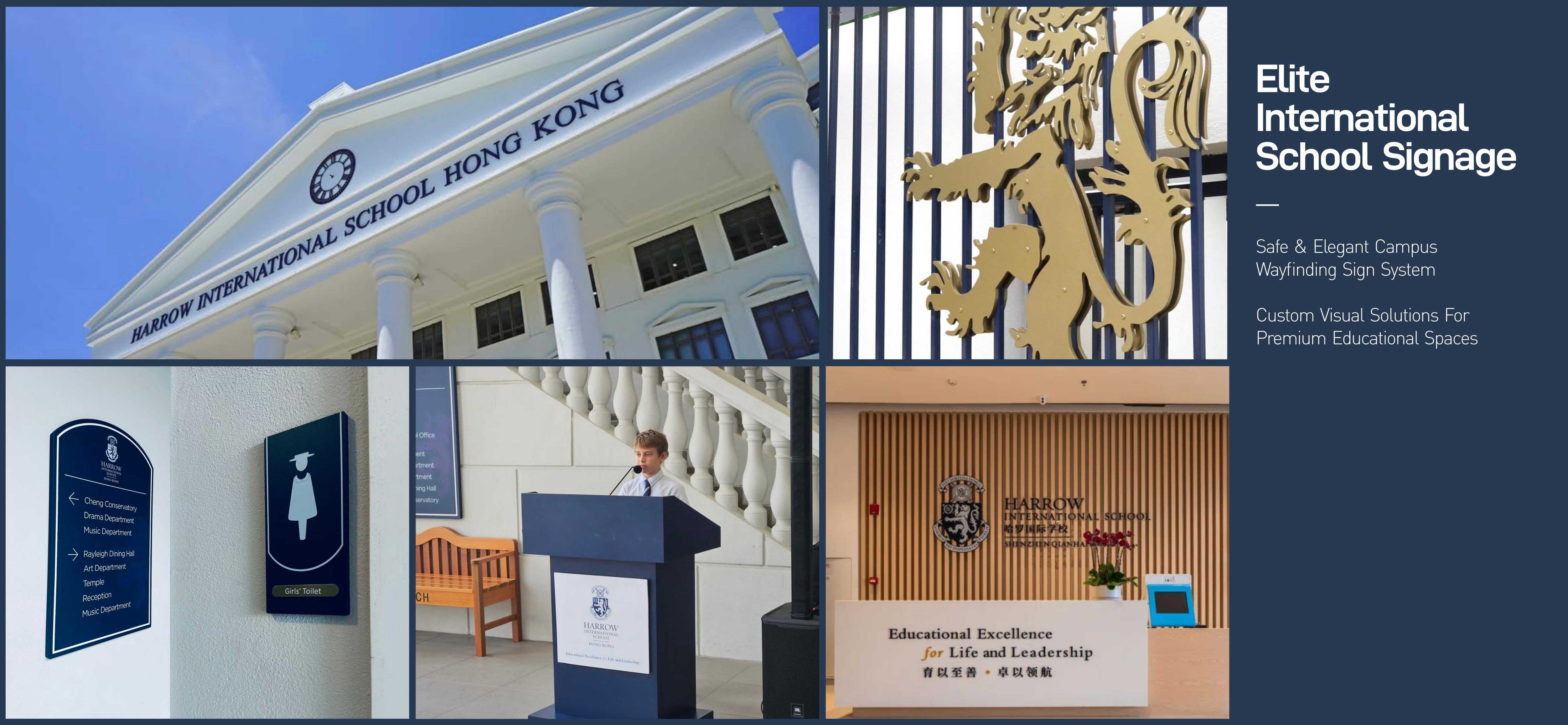
Schools and campuses can be complex environments with multiple buildings, classrooms, offices, sports facilities, parking areas and shared spaces. Students may know the campus well, but new students, parents, visitors and service personnel often need clear guidance to reach their destinations.
An effective school wayfinding signage system helps users understand where they are, where they need to go and how to move through the campus efficiently. From entrance identification to directional signs and classroom signage, each element should work together as part of a consistent navigation system.

Why Is School Wayfinding Signage Important?
School signage serves more than a directional function. It can support navigation, safety, accessibility and the overall experience of students and visitors.
Clear navigation is particularly important for large schools, international schools, universities and multi-building campuses where users may need to move between academic buildings, administrative offices, sports facilities and other areas.
A well-planned wayfinding system can reduce confusion and help improve the overall visitor experience, particularly for parents, new students and first-time visitors.
1. Campus Entrance and Identification Signs
Wayfinding begins at the campus entrance.
Entrance signage should clearly identify the school or institution while helping visitors recognize main entrances, vehicle access points, pedestrian routes and reception areas.
For larger campuses, monument signs, freestanding signs and building identification signs can also help establish a clear hierarchy between different areas.
2. Directional Wayfinding Signs
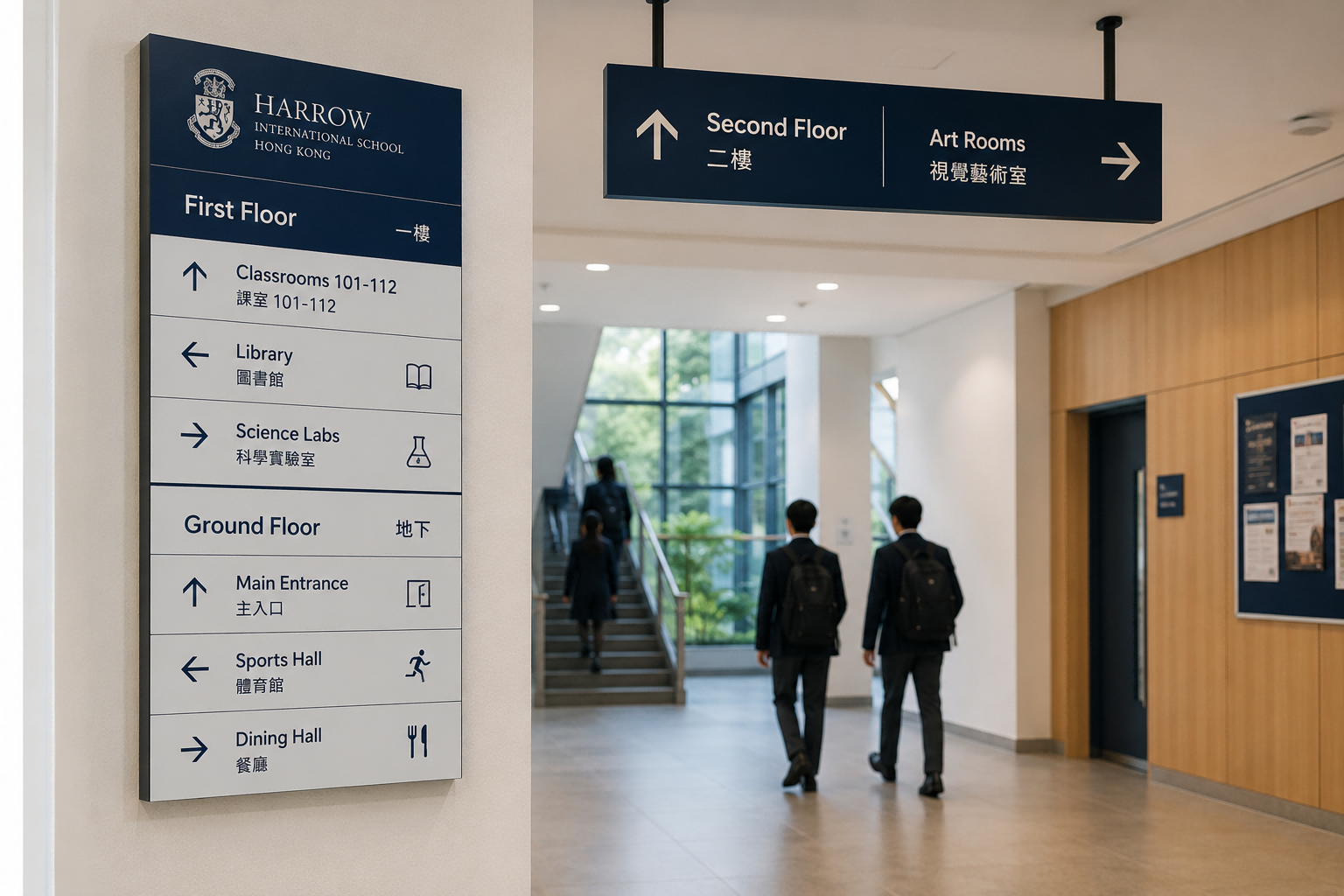
Directional signs help students and visitors navigate between classrooms, departments, libraries, sports facilities, cafeterias, auditoriums and other destinations.
Signs should be positioned before important decision points so users have enough time to understand the information and choose the correct route.
This same principle applies to other complex environments. Our guide to choosing the right wayfinding signage for commercial projects explains how circulation routes and decision points can influence effective sign placement.

3. Building and Department Identification
Large schools and universities may contain multiple academic buildings, departments and shared facilities.
Clear building and department identification helps users recognize destinations from a distance and creates a more organized campus environment.
Consistent typography, colors, symbols and naming conventions can also strengthen the visual identity of the school while making navigation easier.
4. Classroom and Room Identification Signs
Classroom and room signs provide detailed information at the final stage of a visitor's journey.
These may include classroom numbers, administrative offices, laboratories, meeting rooms, staff areas and other facilities.
Room identification should remain visually consistent with the overall campus signage system while providing clear information at close viewing distances.
5. Directory and Information Signs
Campus directories are especially useful at main entrances, reception areas and major circulation points.
They can provide an overview of buildings, departments, floors and facilities, helping visitors understand the campus before continuing their journey.
On larger campuses, maps and “You Are Here” information can also support orientation and route planning.
6. Safety and Emergency Signage
Safety signage is an essential part of school and campus environments.
Emergency exits, evacuation routes, restricted areas and safety information should be clearly communicated and positioned where users can identify them quickly.
Requirements vary by country and project, so signage planning should always follow applicable local building, fire safety and accessibility regulations.
Accessibility in School Wayfinding
An effective campus wayfinding system should consider users with different accessibility needs.
Depending on local requirements and the project environment, designers may need to consider readable typography, strong visual contrast, appropriate mounting heights, internationally recognizable pictograms, tactile information or Braille.
For projects subject to U.S. accessibility requirements, project teams can refer to official ADA accessibility standards when evaluating applicable signage requirements.
Creating a Consistent Campus Wayfinding System
Individual signs should not be treated as isolated products.
A successful campus wayfinding system uses a consistent visual language across entrance signs, directories, directional signage, building identification and room signs.
Colors, typography, pictograms, materials and sign layouts should work together so users can recognize information quickly throughout the campus.
For international schools and multicultural environments, multilingual information may also be considered where appropriate.
Materials for School and Campus Signage
Material selection should consider where each sign will be installed and how it will be used.
Exterior campus signage may require weather-resistant metals, durable coatings and suitable structural systems, while interior signs may use aluminum, stainless steel, acrylic or other materials depending on the design requirements.
High-traffic school environments also require attention to durability, maintenance and long-term appearance.
From Wayfinding Design to Signage Manufacturing
A successful school signage project requires coordination between wayfinding design, engineering and manufacturing.
Sign dimensions, materials, mounting structures, surface finishes, graphics and installation conditions should be considered before production begins.
At MACCAN Signage, we provide custom signage and wayfinding solutions for schools, campuses and other complex environments, supporting customized projects from engineering and manufacturing to quality inspection and delivery.
Choosing a School Signage Manufacturer
School and campus signage projects may involve many different sign types across both indoor and outdoor environments.
When selecting a manufacturing partner, project teams can consider custom manufacturing capability, engineering support, material processing, quality control and experience coordinating multiple signage types within one project.
You can explore our School & Campus Signage Solutions to learn more about customized signage and wayfinding systems for educational environments.
Conclusion
Effective school wayfinding signage can make educational environments easier to understand, safer to navigate and more welcoming for students, parents, staff and visitors.
By combining clear information hierarchy, strategic sign placement, consistent visual design, accessibility considerations and suitable materials, schools and campuses can create navigation systems that support users throughout their journey.
For customized projects, considering wayfinding design, engineering and signage manufacturing together from an early stage can also help create a more consistent and practical signage system.

Hospital Wayfinding Signage: How to Improve Navigation in Healthcare Facilities
Related Article