Hospital Wayfinding Signage: Key Design and Manufacturing Considerations
Hospital Wayfinding Signage: Key Design and Manufacturing Considerations
Hospitals and healthcare facilities are among the most complex public environments to navigate. Patients, visitors, medical staff, and service personnel often need to find different departments, consultation rooms, elevators, and emergency facilities within a limited amount of time.
A well-planned hospital wayfinding signage system helps people identify destinations, understand routes, and navigate healthcare environments more confidently.
For hospital developers, architects, contractors, and procurement teams, effective healthcare signage requires coordination between wayfinding design, material selection, accessibility requirements, and manufacturing.
This article explores the key considerations involved in developing a reliable hospital signage system.

1. Why Hospital Wayfinding Signage Matters
Unlike many commercial environments, hospitals serve visitors who may be unfamiliar with the building, experiencing stress, or facing mobility and accessibility challenges.
Clear directional information can help visitors locate departments and facilities without unnecessary confusion.
An effective hospital signage system should consider:
-
Clear navigation: Helping patients and visitors identify routes to departments and service areas.
-
Consistent information: Using coordinated terminology, typography, colors, and symbols.
-
Readable signage: Supporting legibility at appropriate viewing distances.
-
Accessible communication: Considering the needs of people with different physical and sensory abilities.
-
Logical placement: Positioning signs where visitors need to make navigation decisions.
Wayfinding should be considered as an integrated system rather than a collection of unrelated signs.
2. Essential Types of Hospital Signage
Healthcare facilities typically require several categories of architectural signage, each serving a different function.
Directional Signs
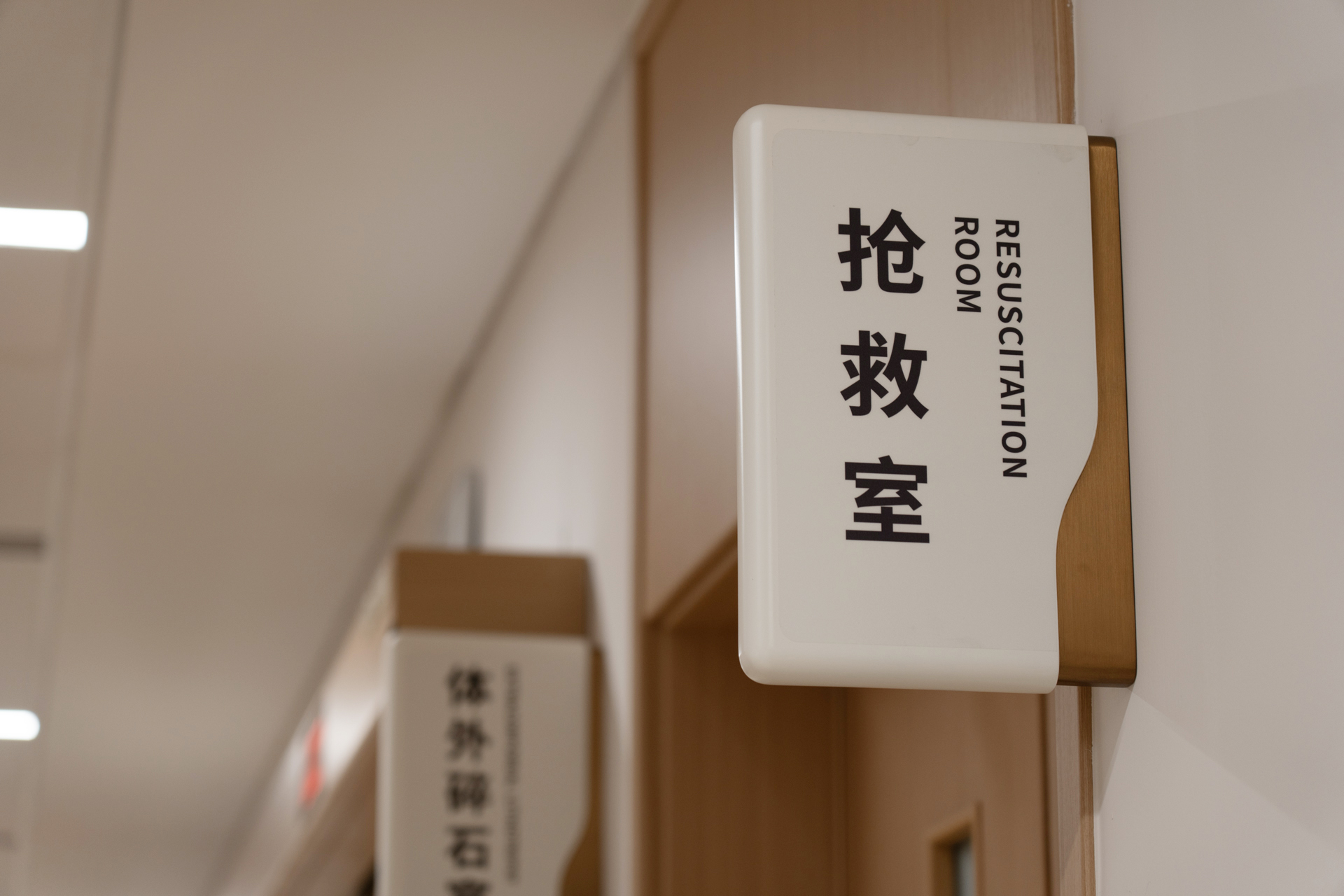
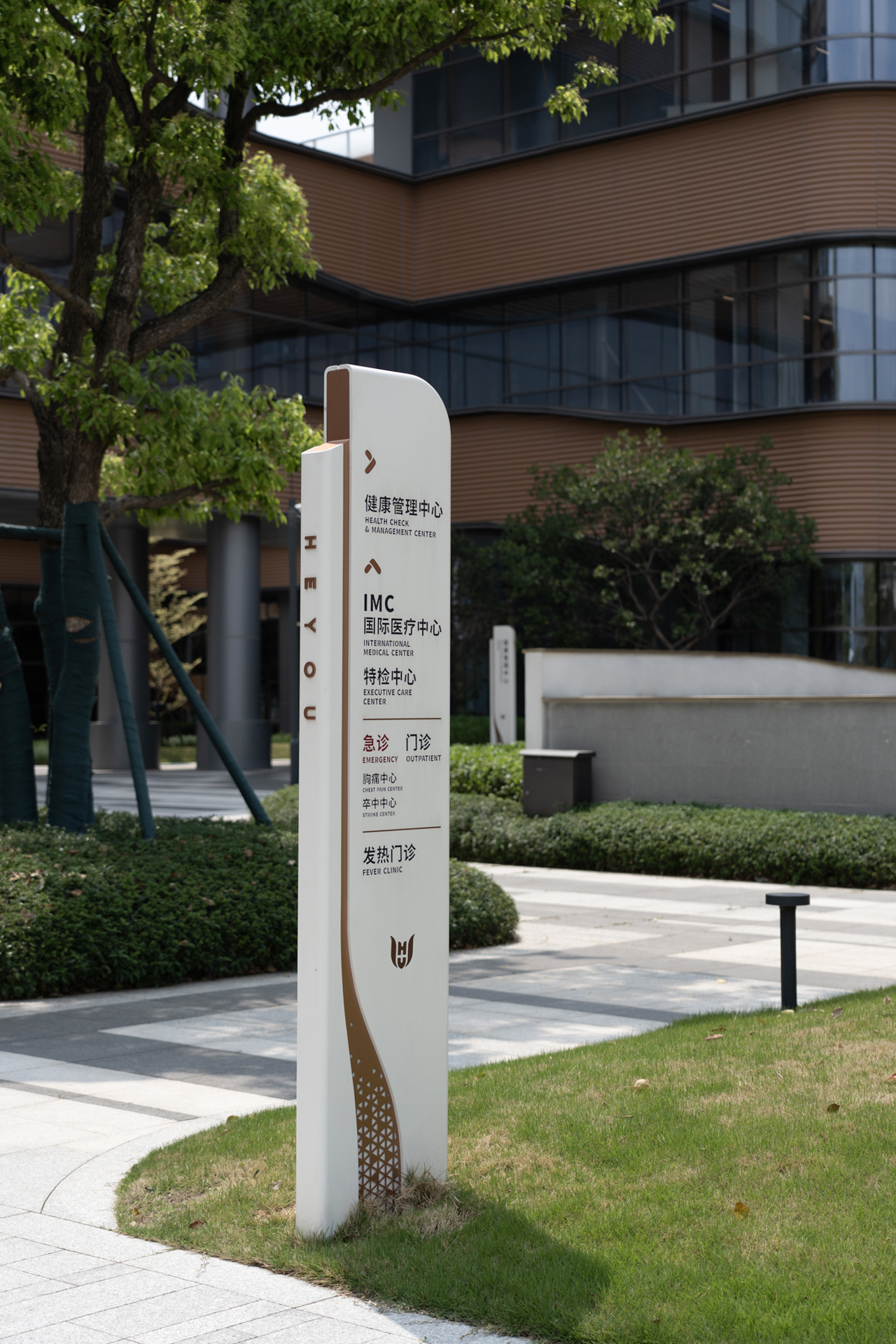
Directional signs guide visitors toward departments, consultation areas, elevators, exits, and other destinations. They may be wall-mounted, suspended, or freestanding depending on the architectural layout.
Department Identification Signs
Department signs help visitors recognize specific healthcare services, such as outpatient clinics, diagnostic areas, laboratories, and treatment departments.
Floor Directories
Directory boards provide an overview of the departments and facilities available on each floor. They are particularly useful near main entrances, elevator lobbies, and circulation areas.
Room Identification Signs
Room number signs, consultation room signs, and staff-area identification support navigation at a more detailed level.
Exterior and Parking Signage
Outdoor identification signs, entrance guidance, and parking directional signs help visitors navigate before entering the building.
Together, these elements form a coordinated healthcare wayfinding system.
3. Material Selection and Manufacturing Considerations
Hospital signage must balance visual consistency, durability, maintenance, and project-specific requirements.
Common materials used in custom healthcare signage include:
| Material | Common Applications | Key Considerations |
|---|---|---|
| Stainless steel | Architectural identification and durable sign components | Surface finish, corrosion resistance, maintenance |
| Aluminum | Directional signs, sign structures, and panels | Weight, fabrication flexibility, surface treatment |
| Acrylic | Sign faces, illuminated elements, and identification panels | Appearance, illumination, cleaning compatibility |
| LED components | Illuminated identification and selected directional signs | Lighting consistency, maintenance access |
Material suitability depends on the installation location, cleaning procedures, environmental conditions, and applicable project specifications.
For large hospital projects, manufacturers should also consider production consistency across multiple sign types, dimensions, and installation locations.
4. Accessibility and Readability in Healthcare Wayfinding
Accessibility is an important consideration in hospital signage planning.
Readable typography, appropriate contrast, consistent symbols, and suitable sign placement can help make healthcare environments easier to navigate.
Depending on the project location, certain identification and directional signs may also need to meet specific accessibility requirements.
For projects in the United States, the 2010 ADA Standards for Accessible Design provide requirements relevant to accessible signage, including certain tactile characters, Braille, visual characters, and sign placement.
Project teams should confirm which accessibility standards and local building requirements apply before approving the final signage specifications.
Manufacturers can support the process by producing signage according to approved drawings, dimensions, materials, and technical requirements.
5. Quality Control and Coordination for Large Hospital Projects
Healthcare developments may require hundreds of individual signs across multiple floors, departments, and buildings.
Maintaining consistency is therefore an important manufacturing consideration.
Key areas to review include:
-
Approved samples and material specifications
-
Typography, colors, symbols, and finishes
-
Dimensions and mounting requirements
-
Illumination consistency, where applicable
-
Production inspections and protective packaging
-
Sign schedules and delivery coordination
Clear communication between designers, contractors, and manufacturers can help reduce production errors and installation difficulties.
6. Choosing a Hospital Signage Manufacturer
When selecting a healthcare signage manufacturer, procurement teams should evaluate more than the initial quotation.
Important questions include:
-
Can the manufacturer produce multiple signage types within one project?
-
Can the factory work from CAD drawings and detailed specifications?
-
Are material samples or prototypes available for project approval?
-
How are production quality and finish consistency managed?
-
Can the manufacturer support bulk production and delivery coordination?
A manufacturer familiar with architectural signage can help translate approved designs into finished products that meet the project's manufacturing requirements.
Healthcare Signage Manufacturing with Maccan Signage
Maccan Signage provides custom architectural signage and wayfinding manufacturing for healthcare, hospitality, retail, commercial, and other built environments.
Our capabilities include metal and acrylic fabrication, directional signs, directory boards, room identification signs, and illuminated signage components.
Our project experience includes signage manufacturing for Heyoo International Medical Center, demonstrating the application of customized signage within a healthcare environment.
Explore our Healthcare Signage Solutions to learn more about the signage applications we support.
Planning a Hospital Wayfinding Signage Project?
Whether you are developing a new healthcare facility or updating an existing signage system, Maccan Signage can review your project drawings, signage schedule, quantities, and material requirements.
Contact our team to discuss your custom signage manufacturing needs.
Website: https://www.maccansignage.com
Email: info@maccansignage.com
WhatsApp: +852 6959 3497
Hospital Wayfinding Signs: 6 Essential Sign Types for Healthcare Facilities
Related Article